
B2B IT Consulting Platform Redesign
Keyideas Infotech is a long-established IT consulting and software services company founded in 2007. Their website functions as a primary growth channel.
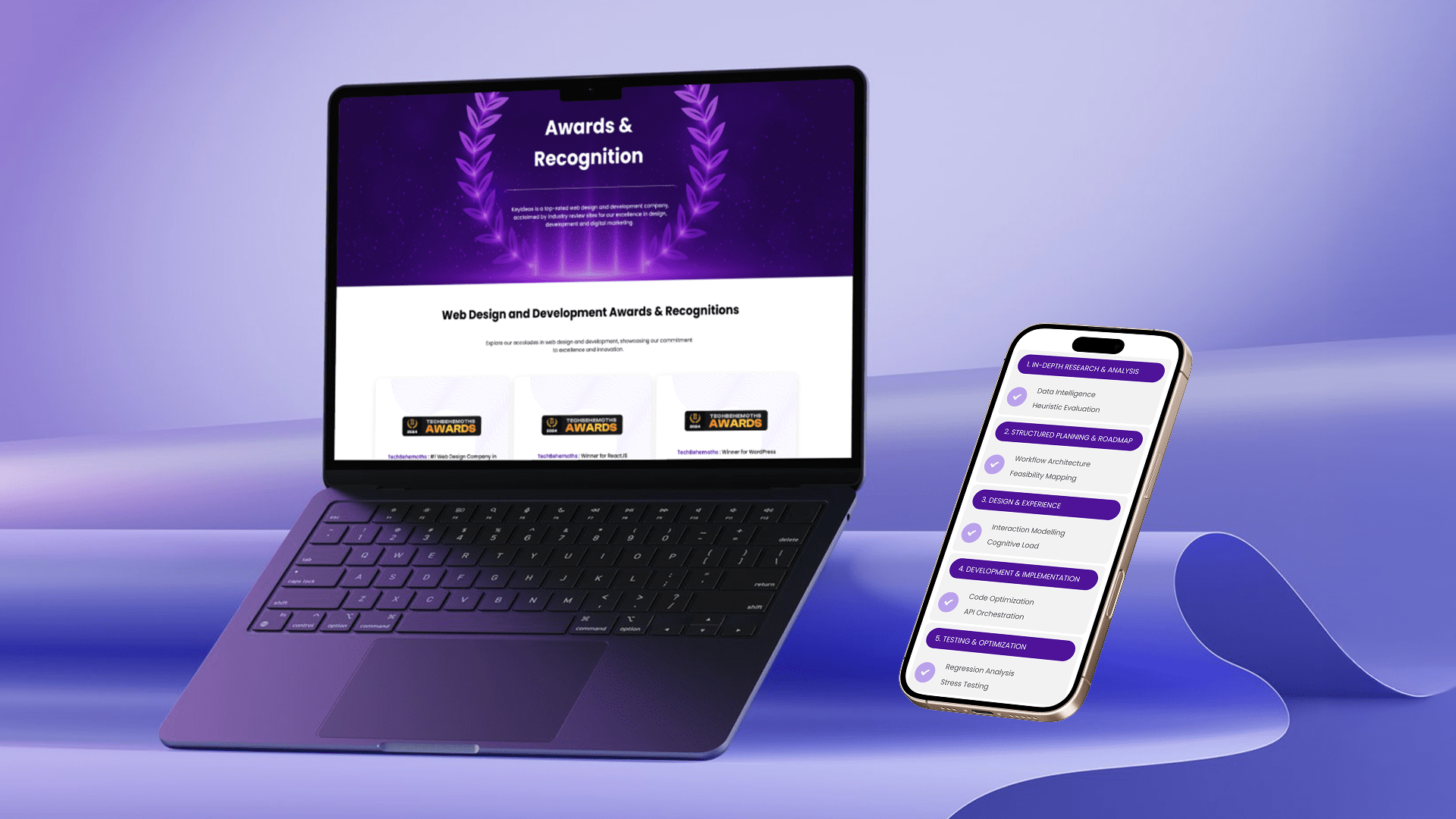
Platform Overview and Business Context
Keyideas delivers end-to-end digital services including software development, UI UX, e-commerce, mobile applications, product engineering, and digital experience design across multiple industries such as healthcare, jewelry, enterprise systems, fintech, real estate, and e-commerce.
It is not a brochure site but a large-scale business platform designed to attract organic traffic, communicate service depth, and convert visitors into qualified leads. Over time, the platform expanded to nearly 800–900 pages, making scalability, consistency, and discoverability critical UX challenges.
The Problem & Challenges
- Visual Inconsistency Across 800+ Pages: Redesigning over 800 webpages without a centralized design system was a huge challenge.
Outdated brand perception: The existing visual style felt generic and dated, failing to communicate the premium quality.
Complex audience segmentation: Catering to diverse target audiences across various industries made it difficult to guide users.
Poor SEO: The lack of a clear content hierarchy resulted in low Google rankings, limiting organic visibility for key service areas.
Tight timeline: The project required a rapid overhaul of existing pages and the creation of new pages while maintaining high quality.
My Role:
Space:
The Solution
- Scalable design system: Built a unified library of components and styles to ensure consistency and a premium aesthetic across all 800+ pages.
- Strategic homepage redesign: Restructured the main landing experience to build immediate trust and effectively route different user personas.
- Prioritized content architecture: Restructured core pages and FAQs based on business value to optimize the most critical sections for SEO.
- Targeted content strategy: Developed industry-specific case studies and articles to address distinct user needs and capture qualified search traffic.
- Integrated marketing ecosystem: Connected the website redesign with a cross-platform social campaign to drive consistent leads.
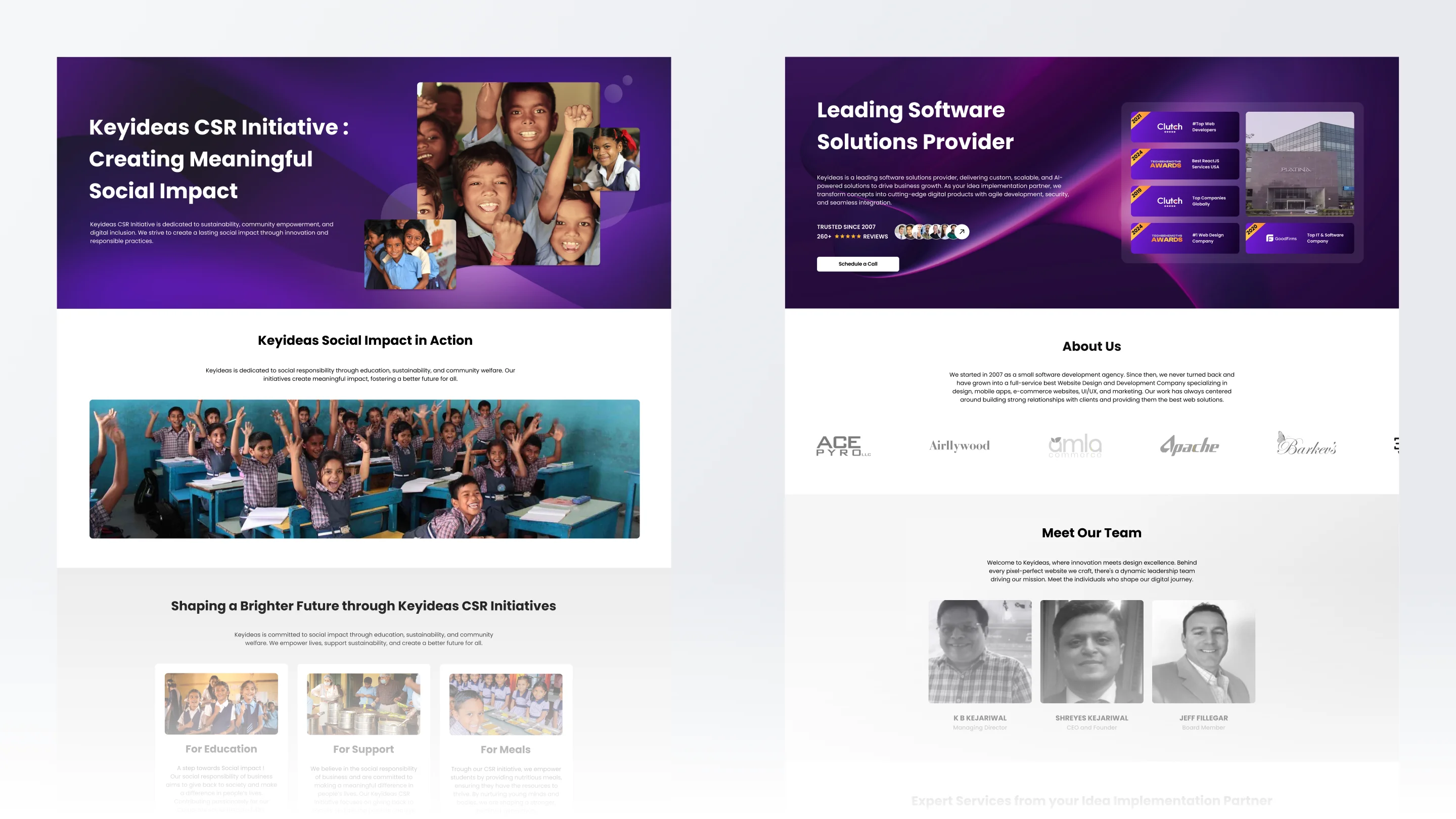
My Role and Scope
Long-term ownership: Took responsibility beyond individual pages, owning the overall experience and its evolution over multiple years.
Led core business pages: Independently designed and redesigned key pages such as the homepage, about page, high-traffic service pages, etc
Scaled impact across the platform: Contributed to and guided redesign efforts across a large set of initiatives, influencing well over a hundred pages.
End-to-end design responsibility: Covered research, design system, content structure, layouts, and interface design to ensure clarity and consistency.
Cross-functional collaboration: Handed designs to dev and QA teams and followed through with live checks to maintain quality and performance.
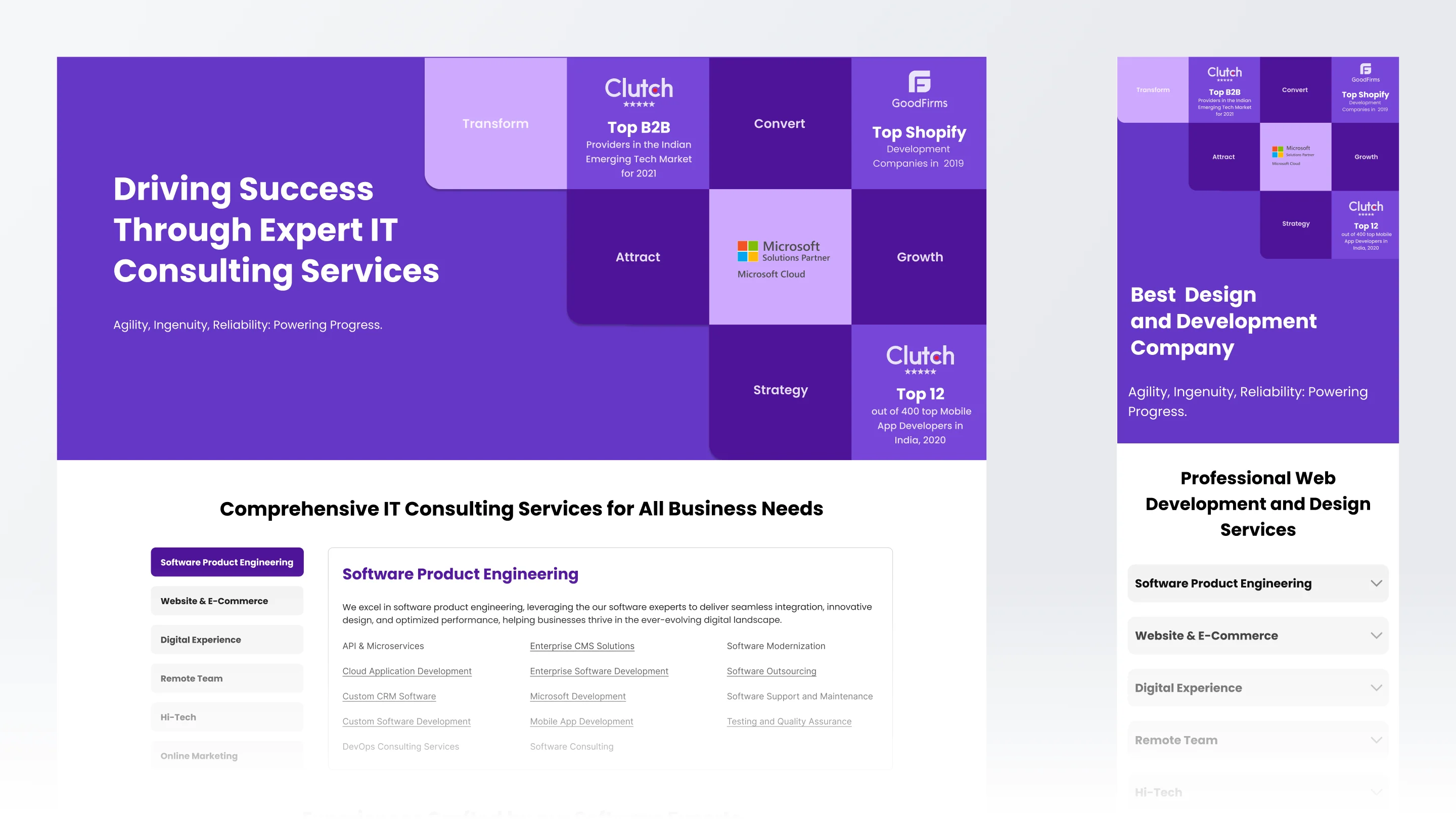
Designing for Scale and System Consistency
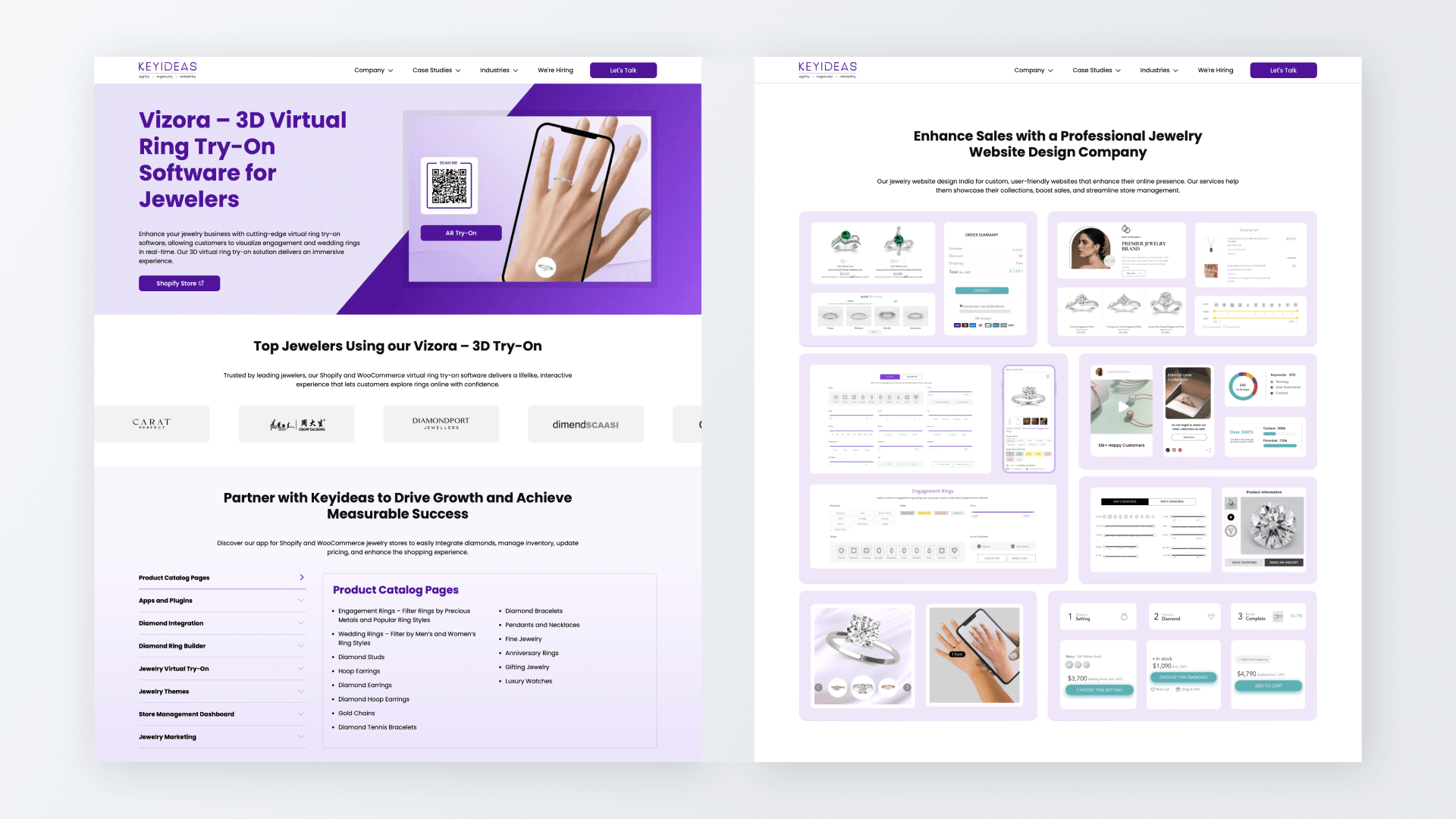
Designed beyond individual pages: Approached the work as a connected system, not isolated screens, to support a platform with 800+ pages.
Repeatable structures: Created consistent layouts and clear hierarchy so users could quickly understand pages without relearning patterns.
Future-proofed page design: Built flexible page patterns that could accommodate new services, and industries for years.
Enabled faster expansion: Designed modular structures that allowed new pages to be launched quickly while staying aligned with existing patterns.
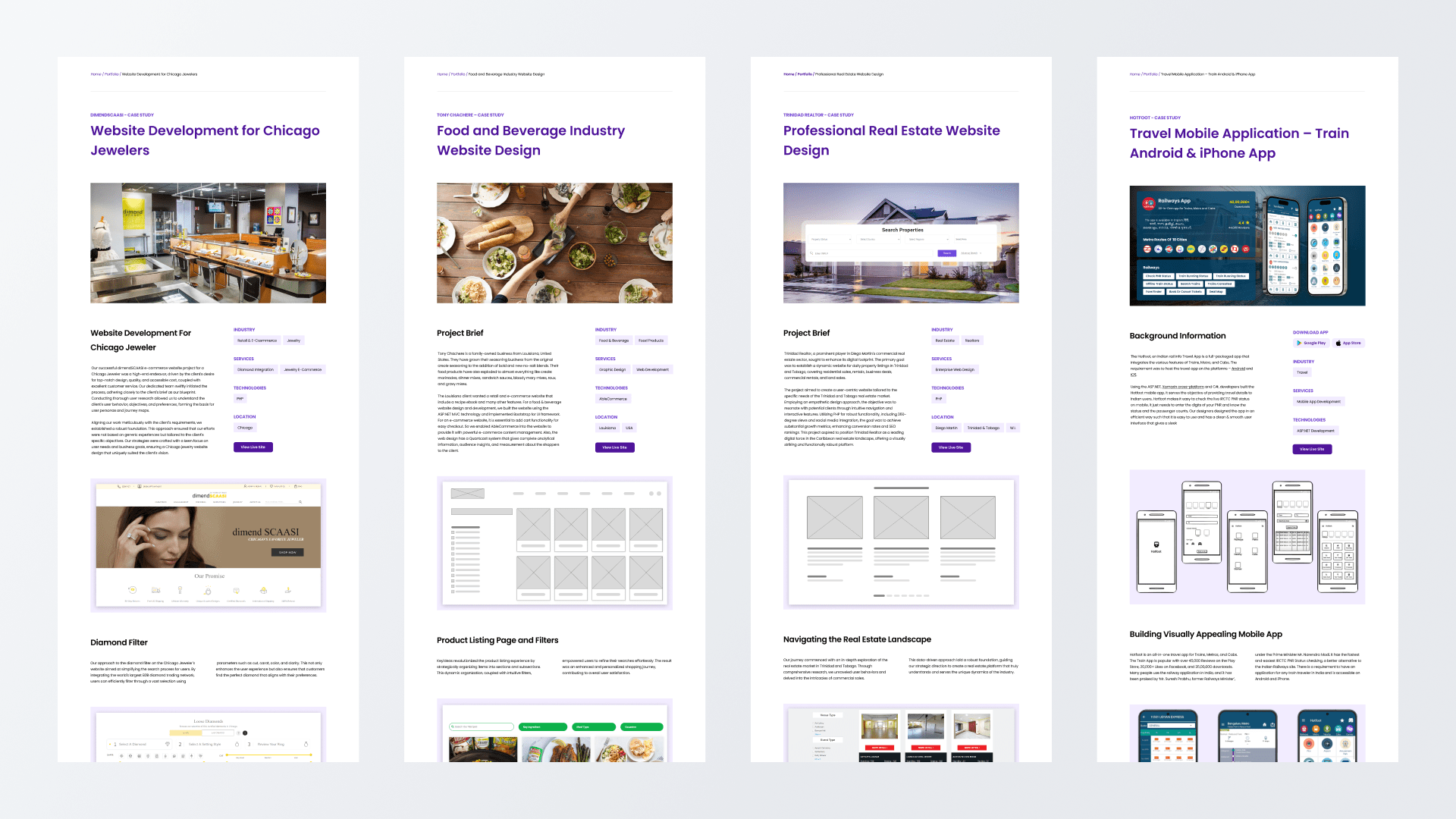
SEO and Conversion Focused Design
Aligned design with organic growth goals: Structured the website to support search visibility while keeping the experience clear and easy.
Built clear content hierarchy: Designed page layouts that naturally highlight important topics, helping both users and search engines.
Guided users toward action: Structured service pages to move users from discovery to sales that supported lead generation.
Thoughtful internal navigation: Planned navigation depth and internal links so users could move through related pages easily without feeling lost.
Responsive and Cross Device Experience
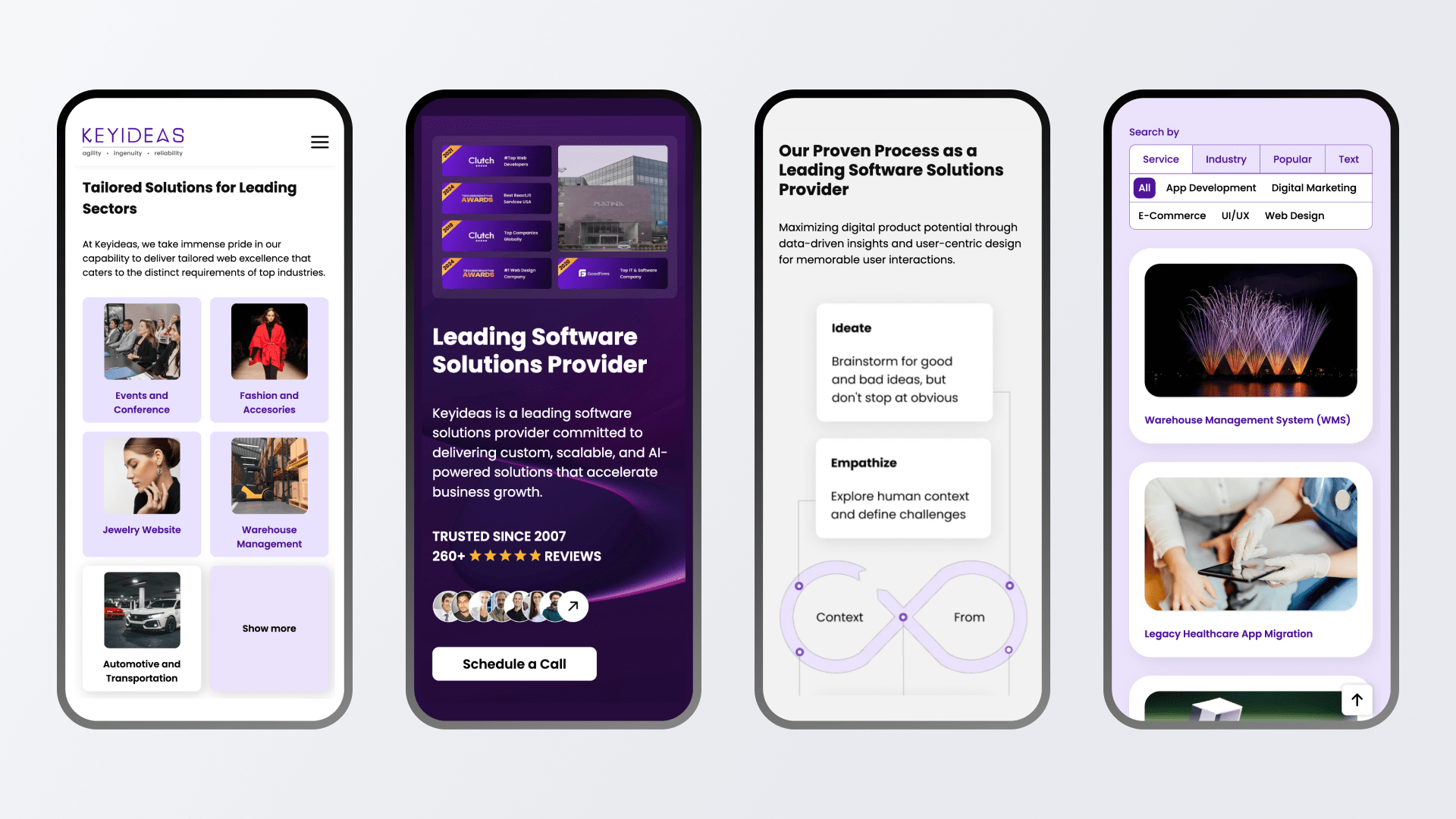
Designed beyond desktop use: Although the platform mainly served desktop users, layouts were intentionally optimized to perform well on mobile.
Maintained clarity across screens: Preserved content hierarchy, navigation, and key actions so users could understand pages quickly on any device.
Supported discovery on mobile: Ensured first-time visitors arriving via organic search could explore services comfortably on smaller screens.
Reduced friction on smaller devices: Adjusted spacing, layout, and interactions to keep pages readable and easy to use without extra effort.
Designing a Sustainable Growth Platform
Shifted from pages to systems: Focused on scalable patterns instead of one-off redesigns, making the platform easier to maintain over time.
Established a clear service narrative: Reworked the experience to clearly explain what the business offers, helping visitors quickly understand.
Enabled faster expansion: Designed flexible structures that allowed new services and pages to be added without reworking the foundation.
Strengthened lead generation: Positioned the platform as a reliable growth channel by aligning usability with business goals.
The Impact
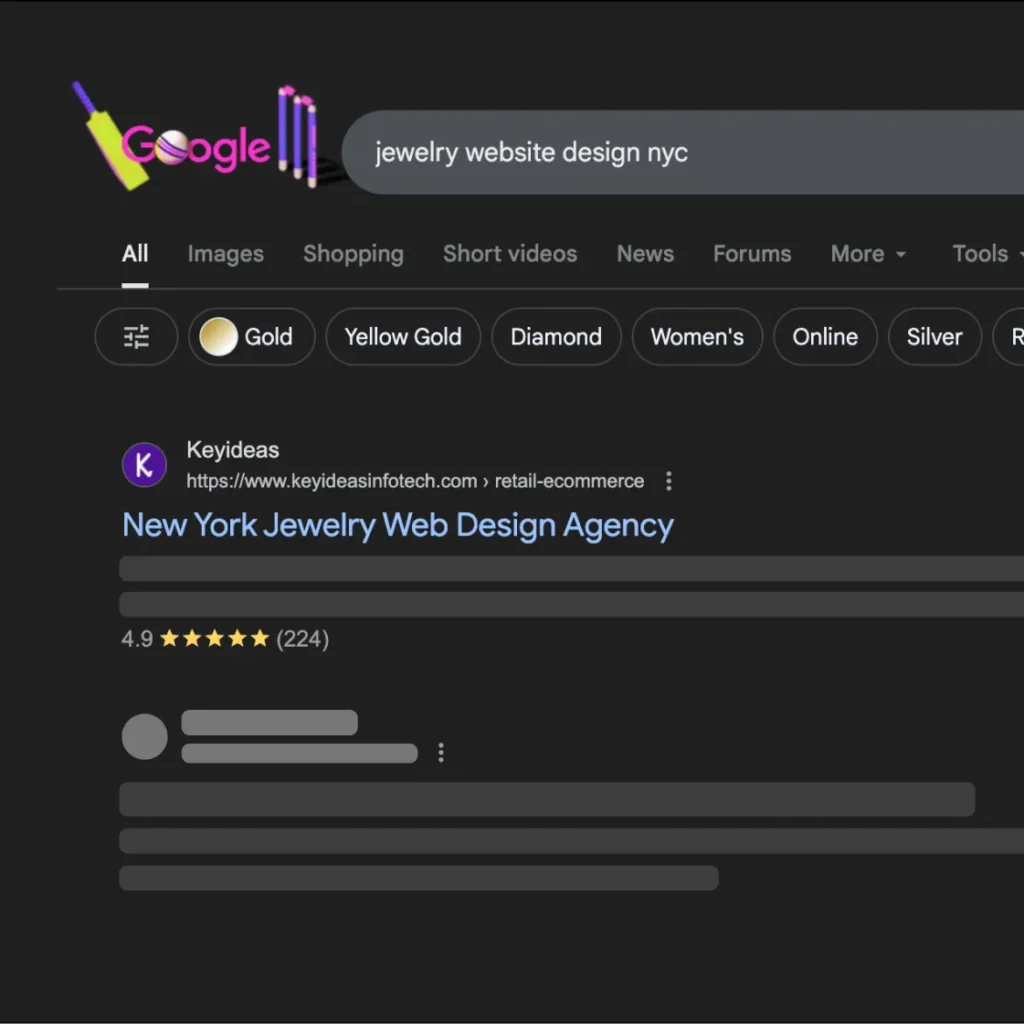
- Top-tier search rankings: Achieved Rank 1 on Google for primary service keywords, significantly boosting organic visibility and brand authority.
- Streamlined lead conversion: Clearer information architecture allowed users to find answers quickly, reducing the dependency on support calls.
- Surge in organic traffic: The combination of technical SEO and targeted content led to a substantial increase in visitors to core service pages.
- Faster iterations: Implementing the robust design system reduced the time required to build/update pages, to meet aggressive launch deadlines.
- Improved user engagement: The redesigned homepage and relevant content successfully retained high-quality visitors, guiding them into the sales funnel.
×
![Full Case Study]()