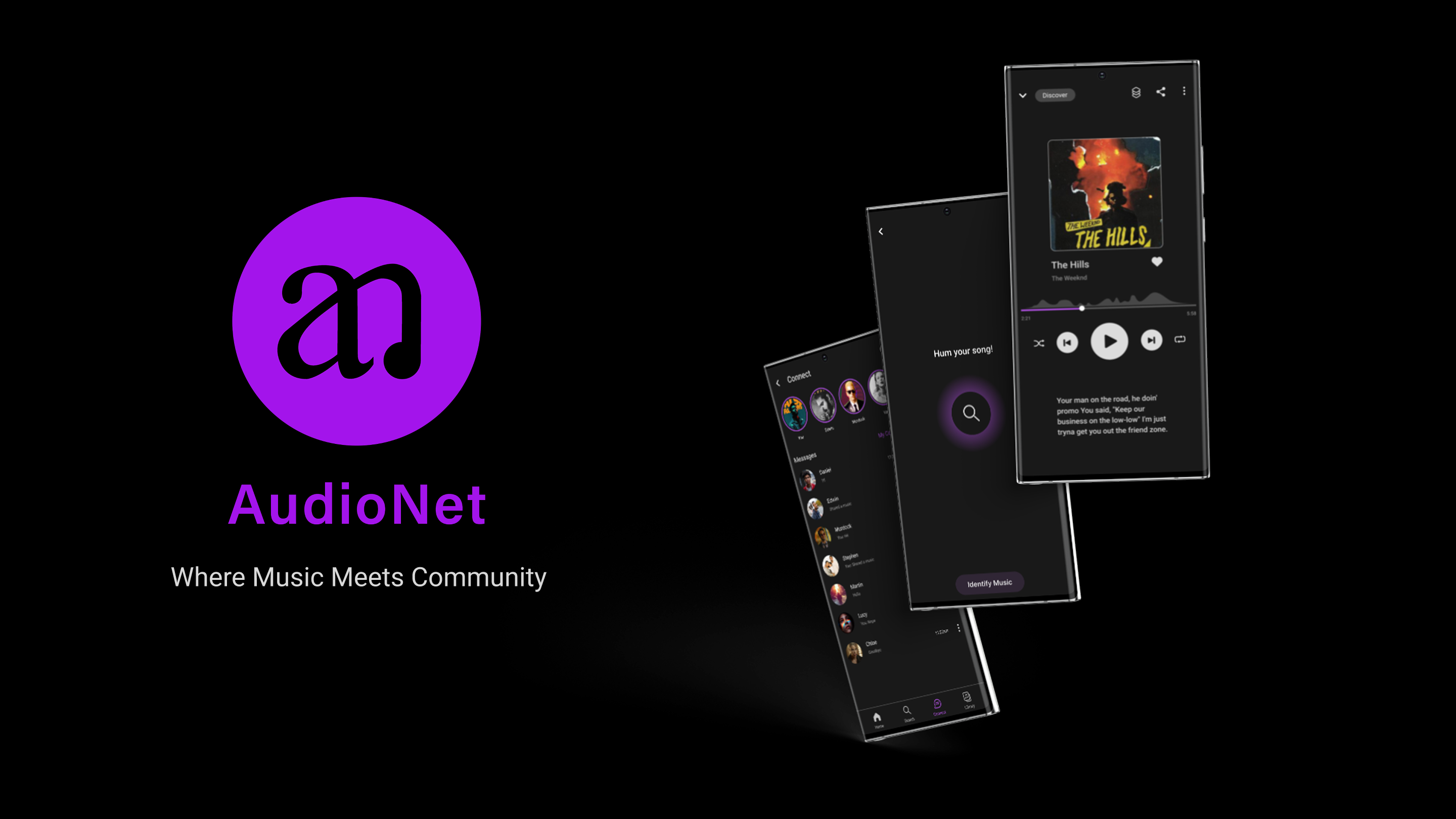
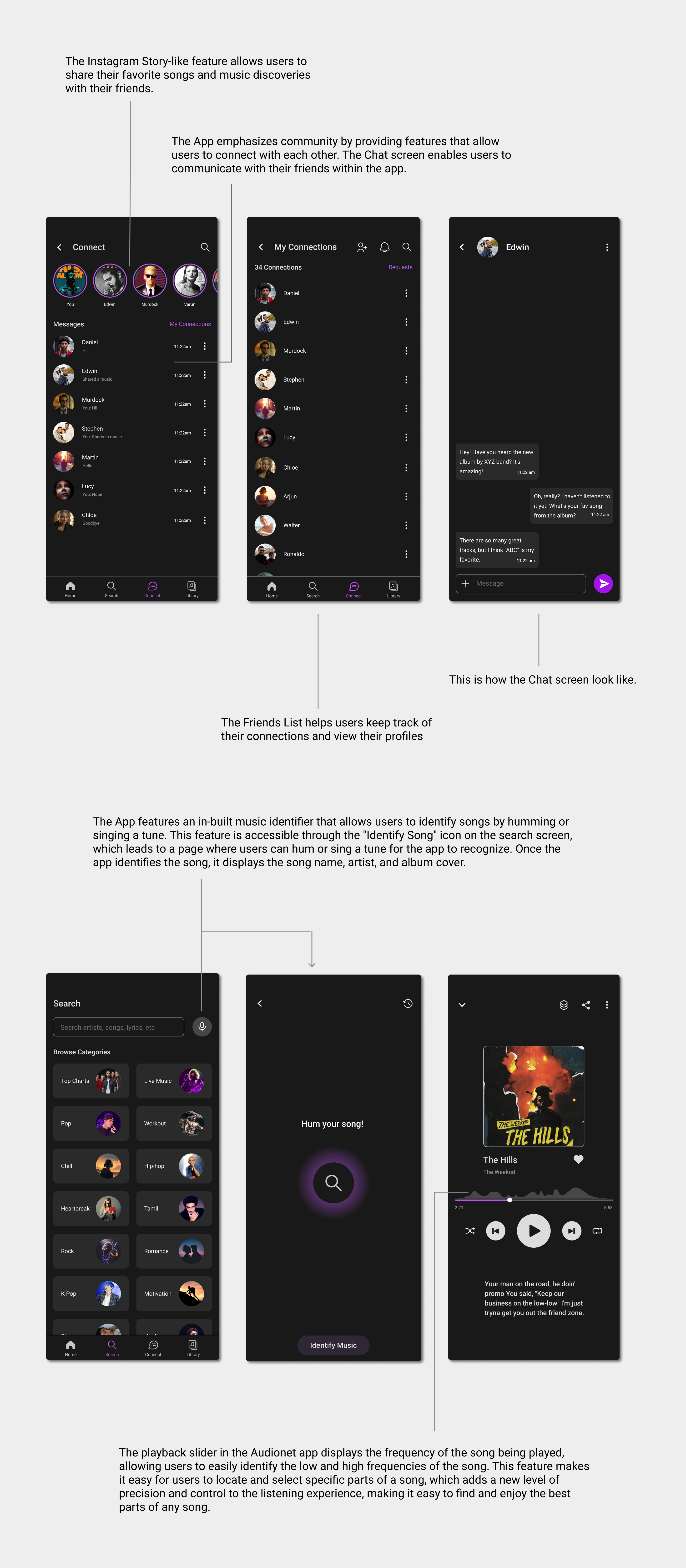
SIMPLE MUSIC SHARING: Chat functionality/User profiles within a music app can enable users to communicate with each other, share music recommendations, and discuss their favorite artists and songs. User profiles can help to create a sense of community within your music app. Users can create their own profiles, add friends, and share their favorite songs and playlists.
BUILT-IN MUSIC IDENTIFIER: Our music app includes a music identification feature that allows you to quickly and easily identify any song that is playing.
PRECISE SONG SELECTION: Our music app has an intuitive interface that allows you to easily select specific parts of a song. You can quickly jump to your favorite parts of a track, & skip over sections you don’t like.
EASY MUSIC DISCOVERY: Sharing music within the app similar to Instagram posts/stories makes it easier for the users to discover new music. Adding more categories in music suggestions like genre, artists, vocals, etc can make the user to discover new songs of their like easily.
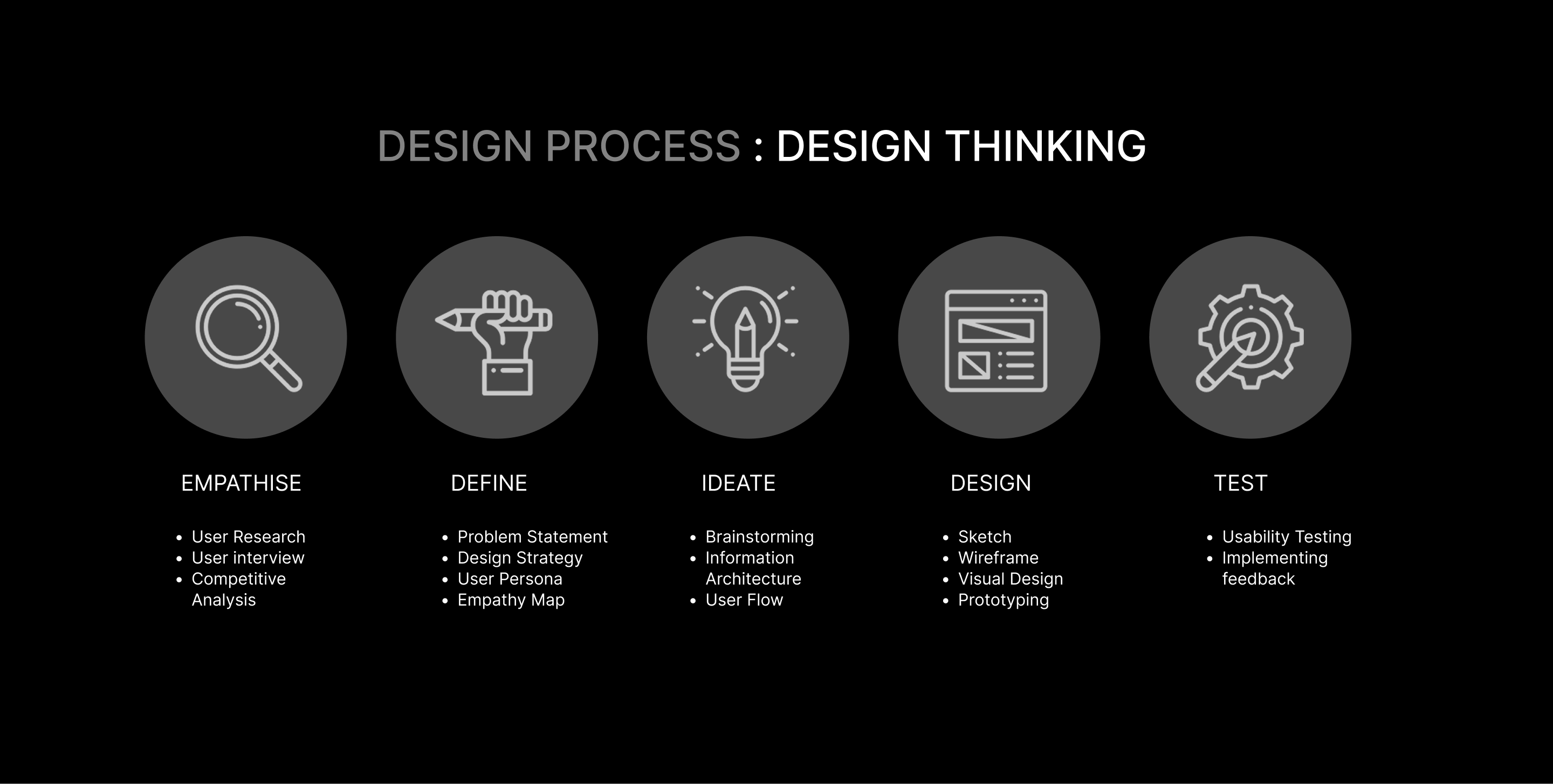
EMPATHISE
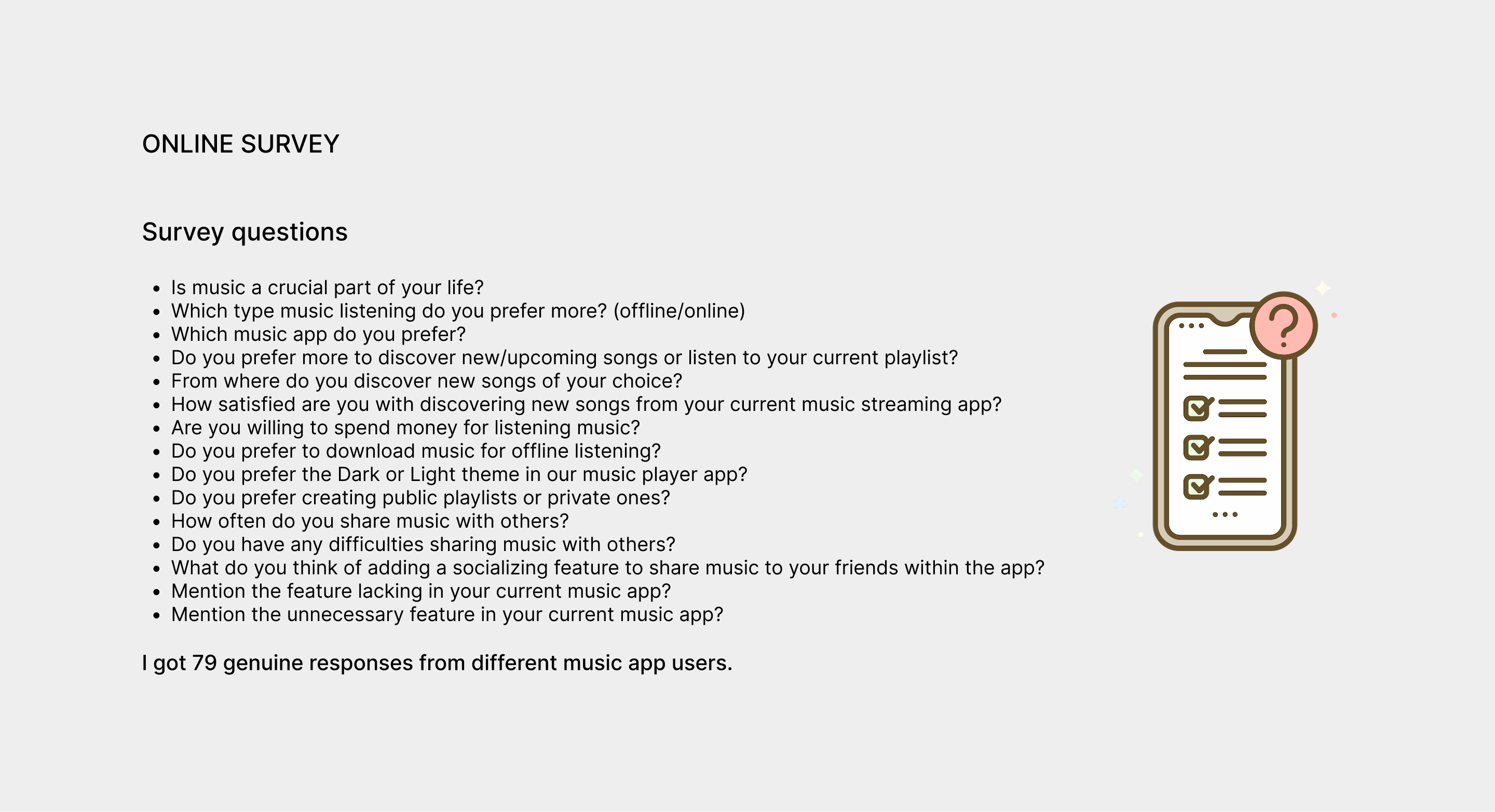
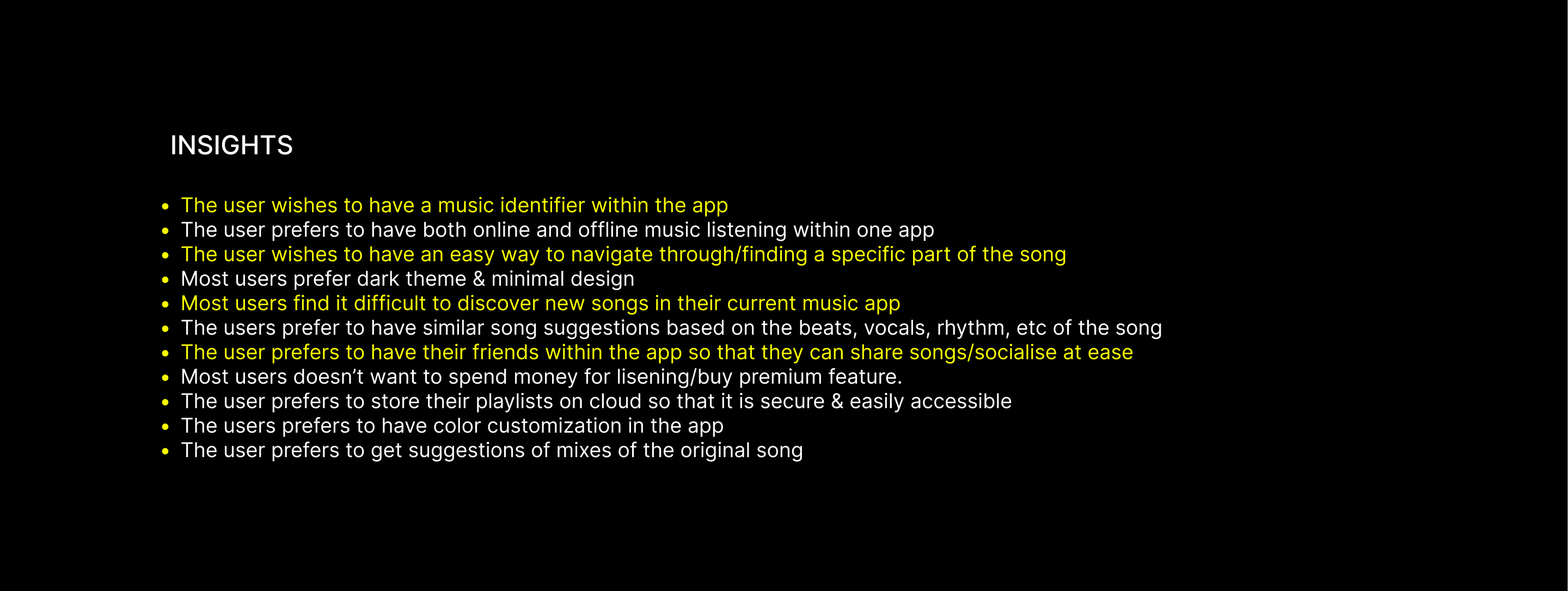
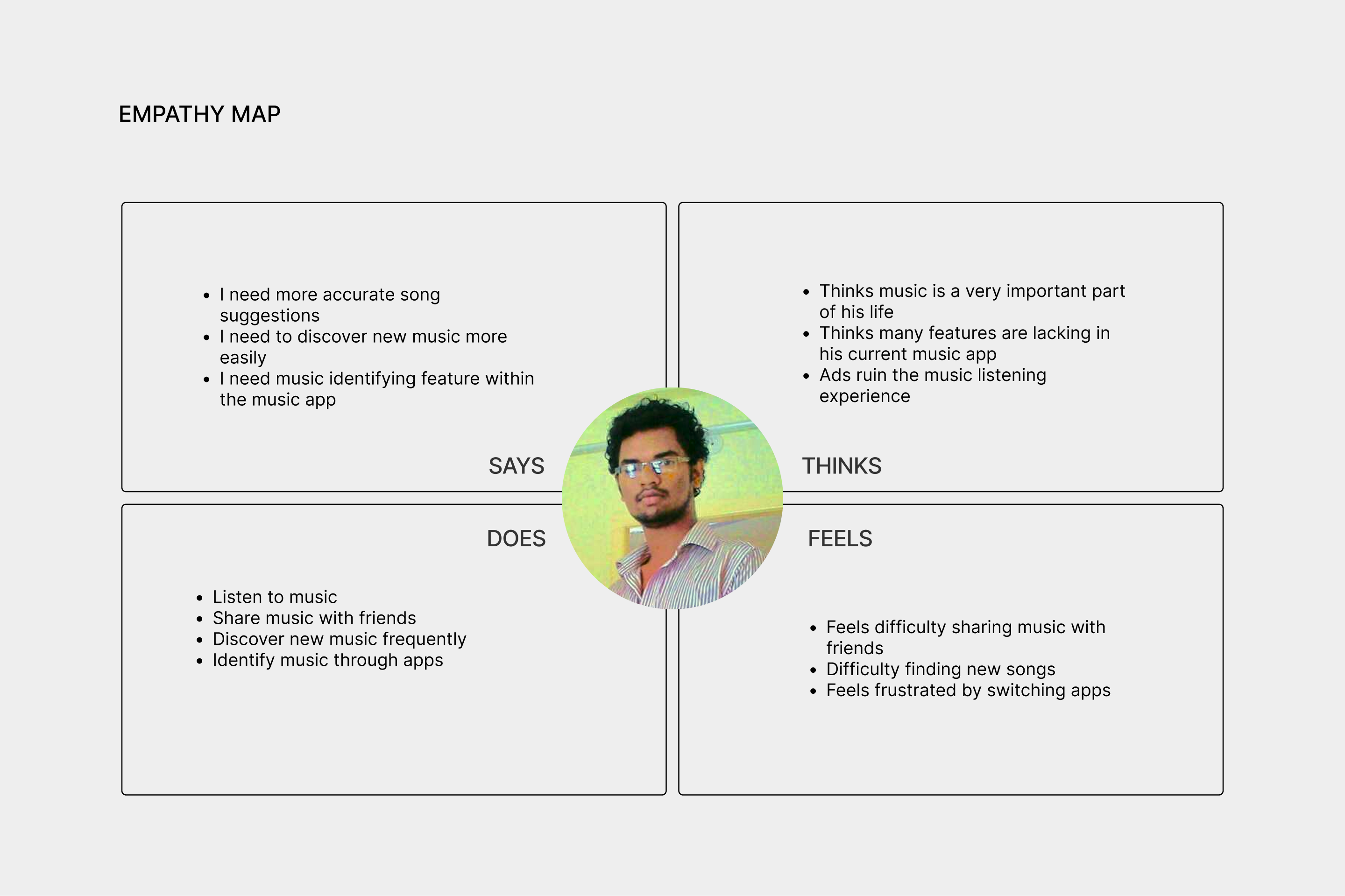
These are the research I have done to gather the insights:
Online survey (79 responses)
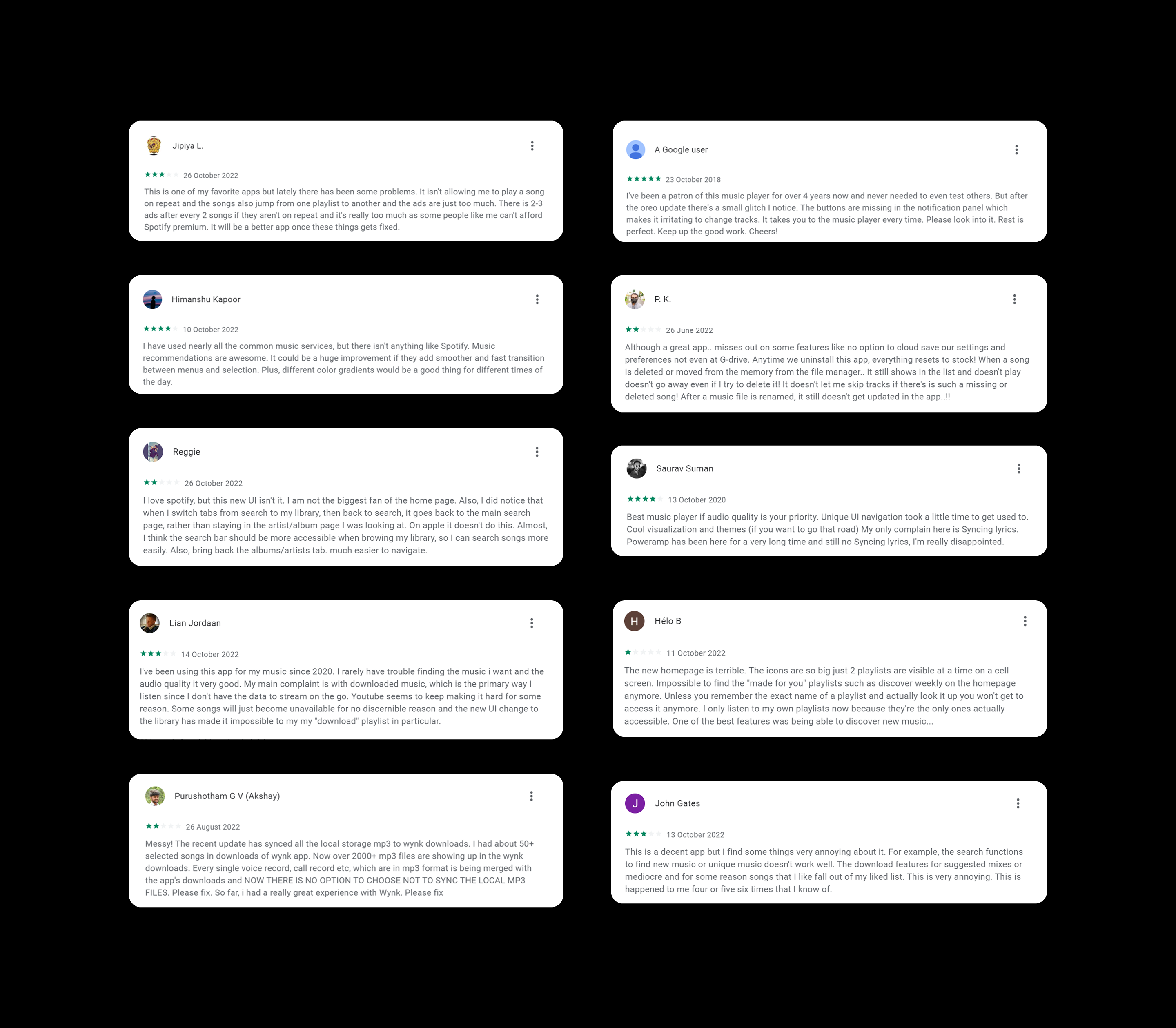
Playstore feedback of popular music apps by genuine users
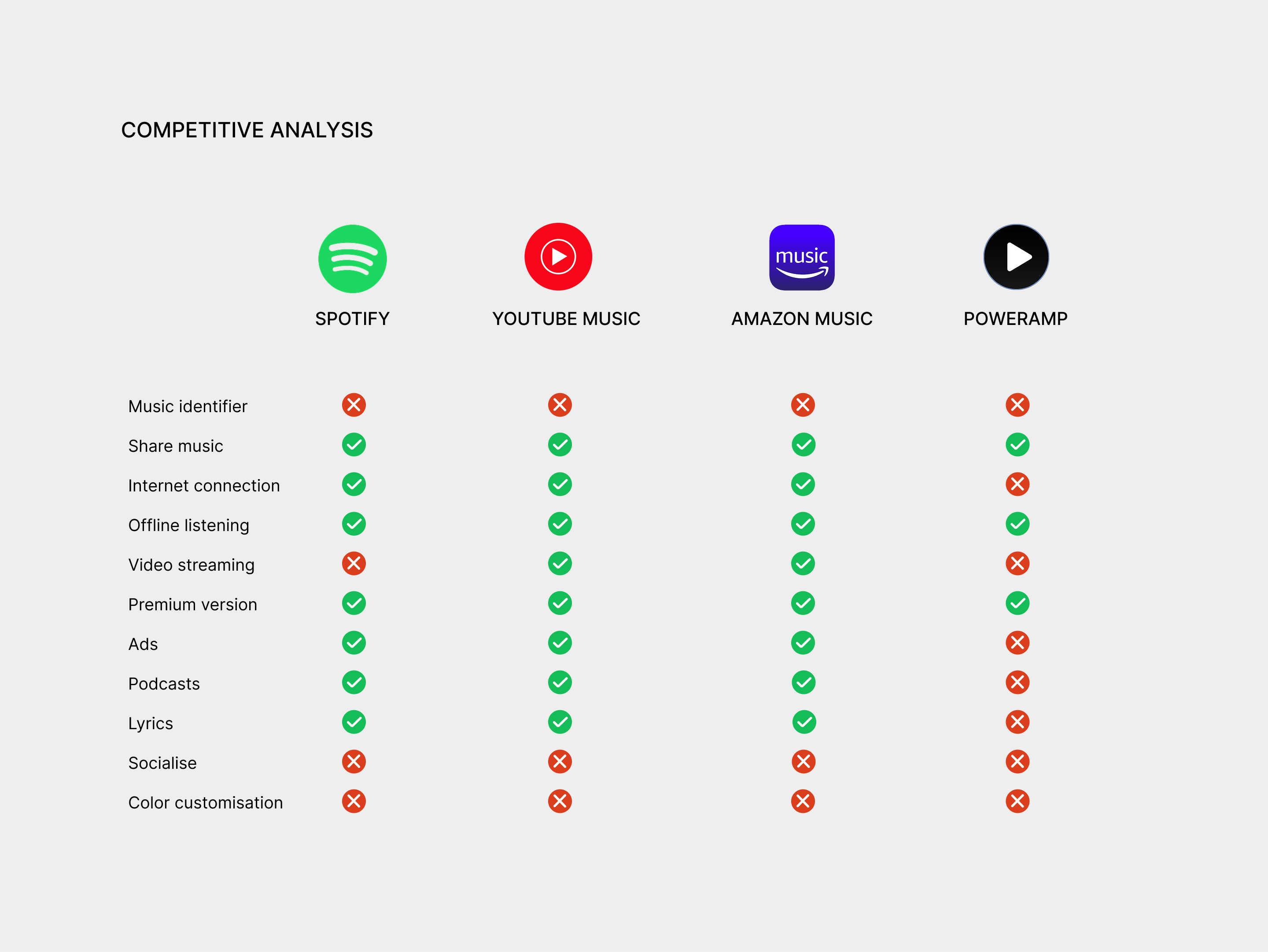
By analyzing similar apps
PLAYSTORE FEEDBACK
I went through Playstore user reviews of popular online music apps (Spotify, Youtube music, Amazon music, Wynk) as well as offline music player app (Poweramp) to collect feedback from an Audiophile perspective. Since there are millions of user reviews there are so many ingenuine feedbacks, with my personal experience as a user I filtered out the authentic reviews.
DEFINE
Problem Statement:
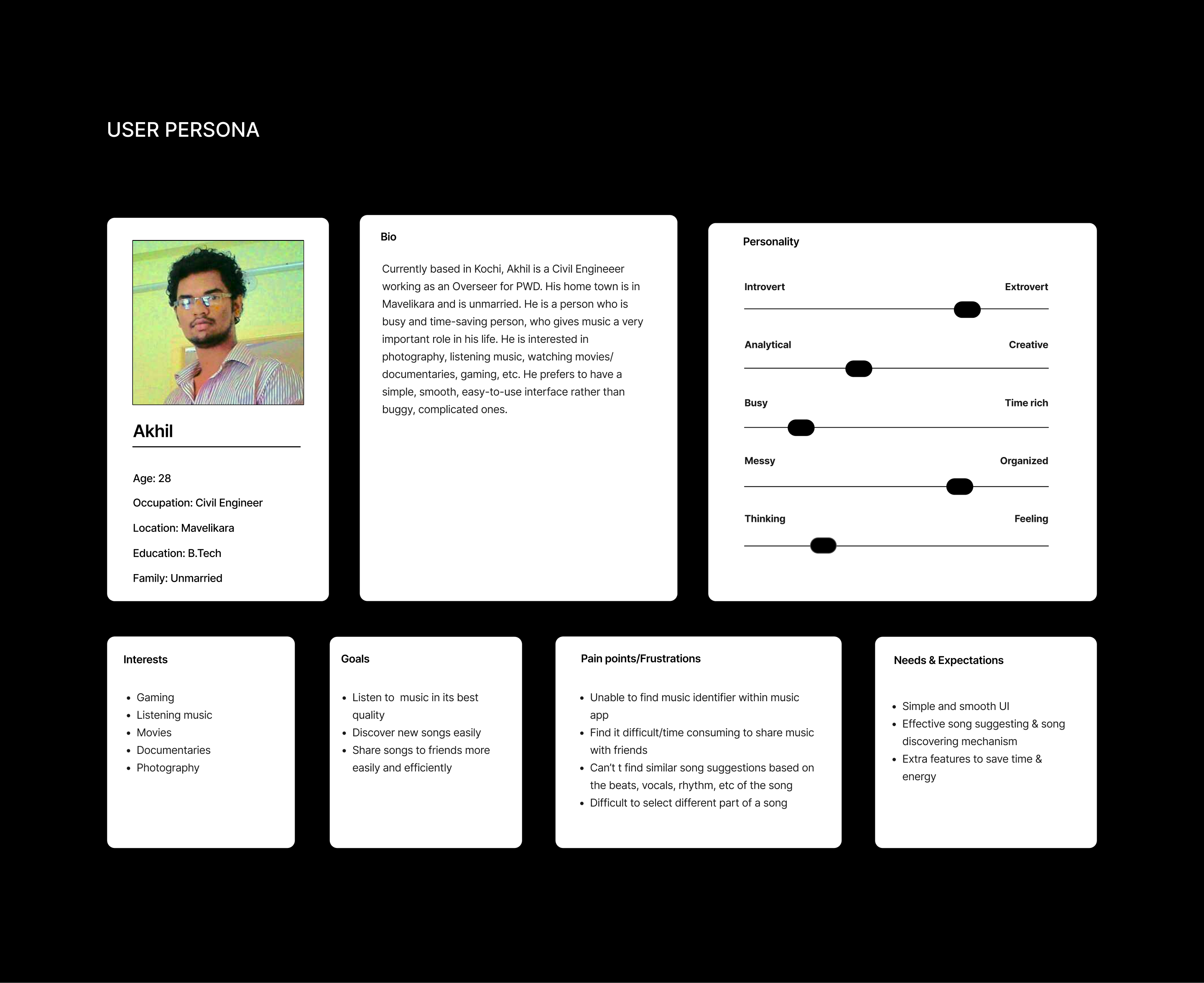
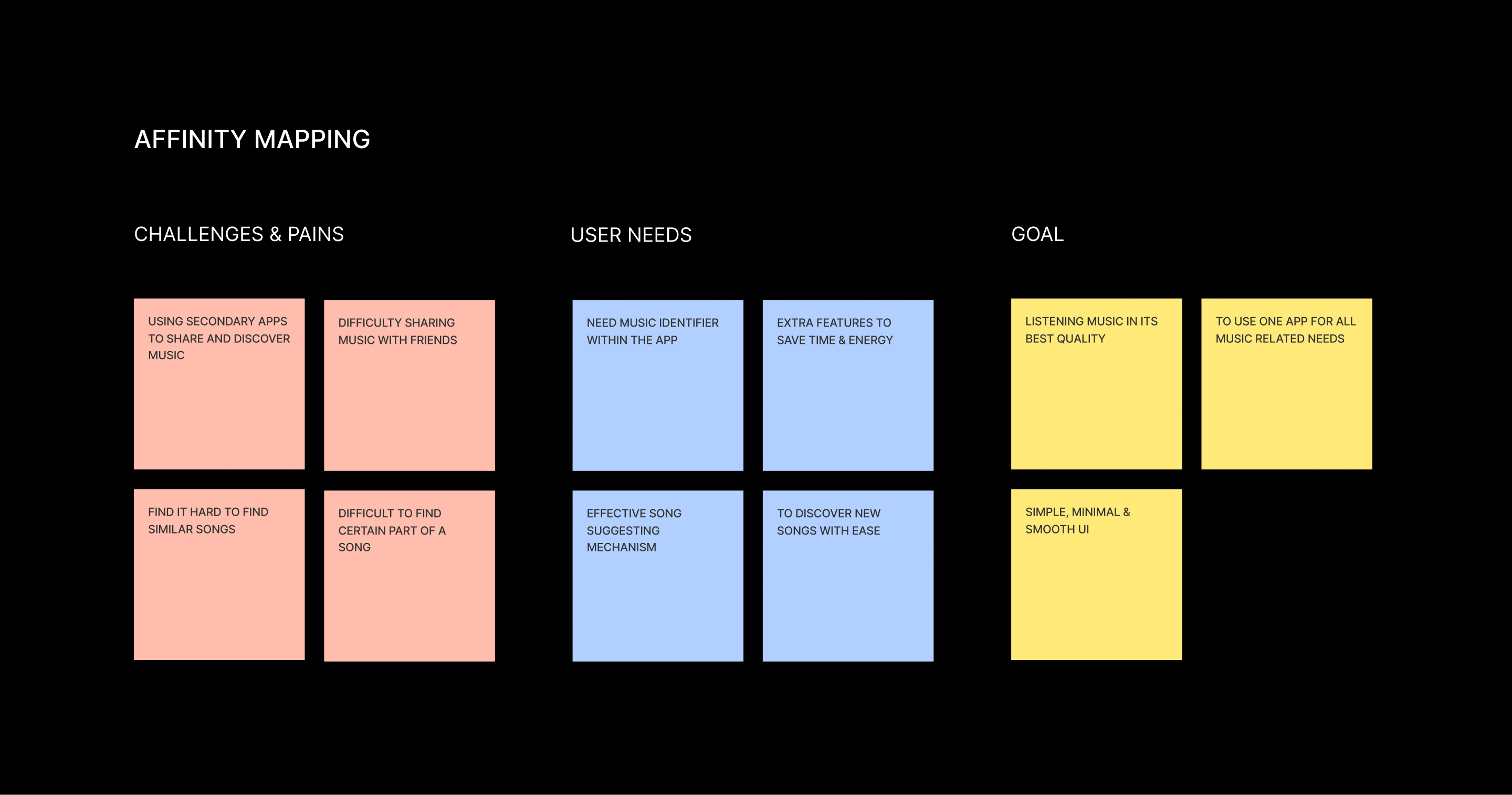
Difficult to discover new songs/similar songs
No music identifier within the app
Difficut to share songs to friends
Difficult to select a certain part of a song
Solution / Design Strategy:
Through the design thinking process I am adding features that are lacking in current music apps like, music identifier, connect with friends(within the app), showing sound wave of a music in the playback progress line(make it easier to select any part of a song).
And with the research data most most people find new songs through Instagram stories, youtube, etc. So adding a feature similar to stories within an app can make it easier to discover new songs.
IDEATE
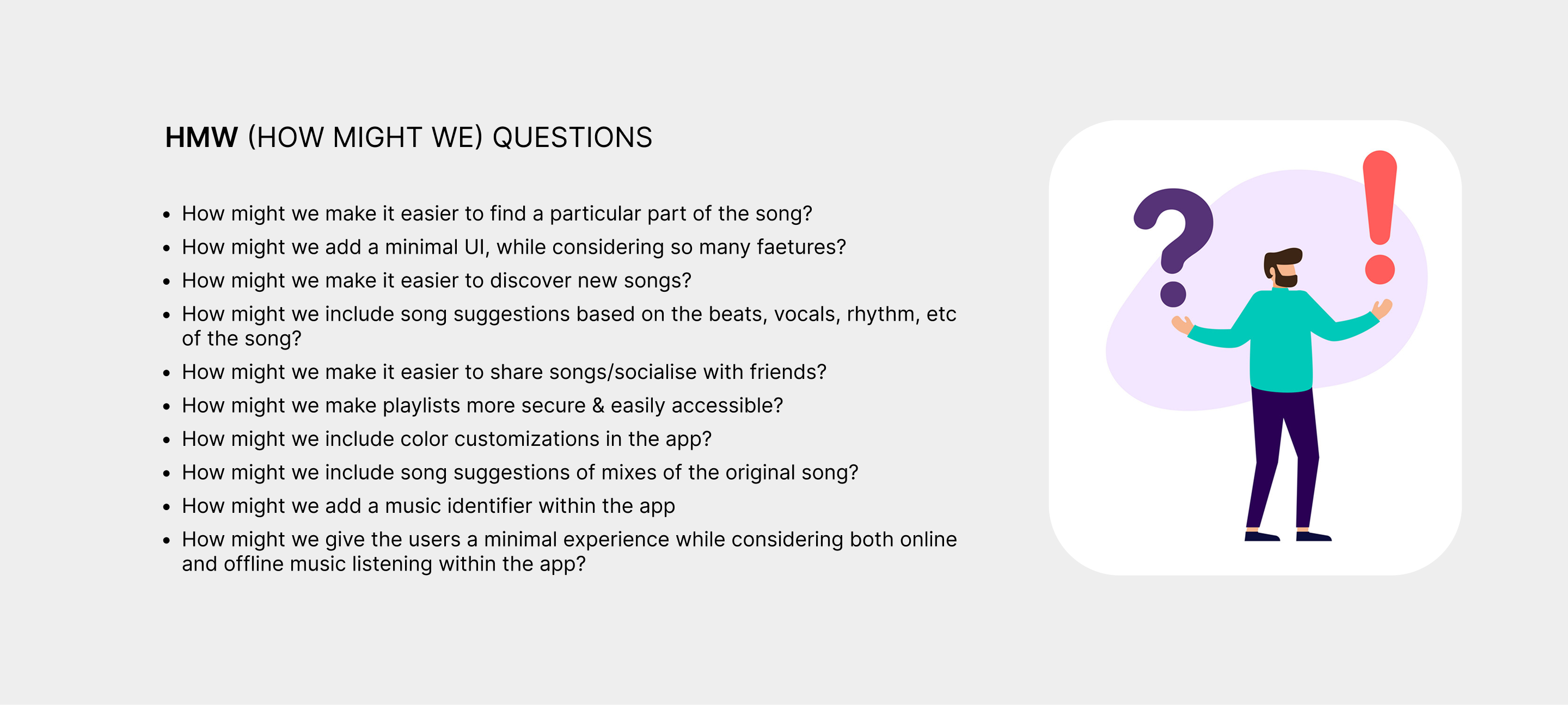
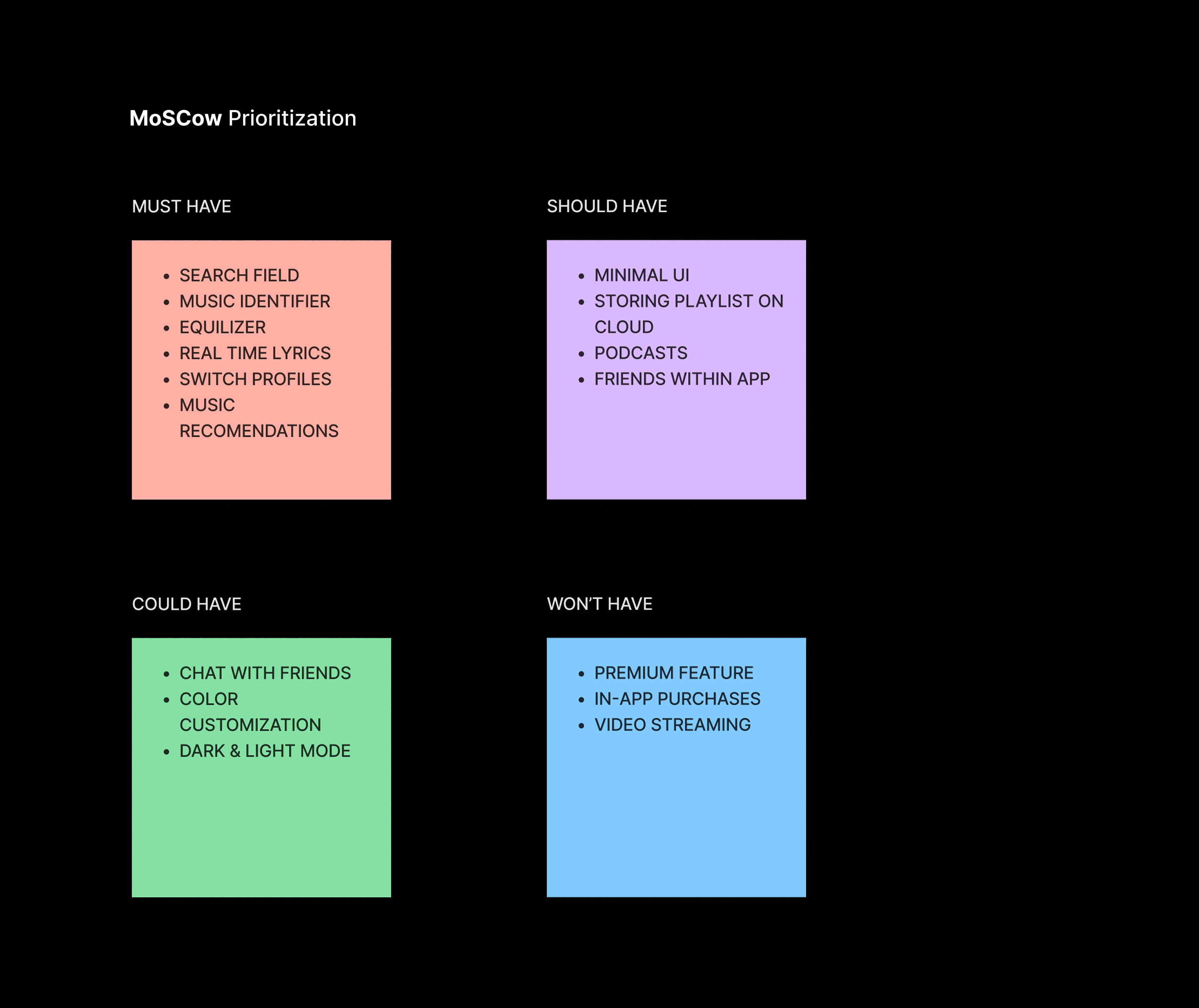
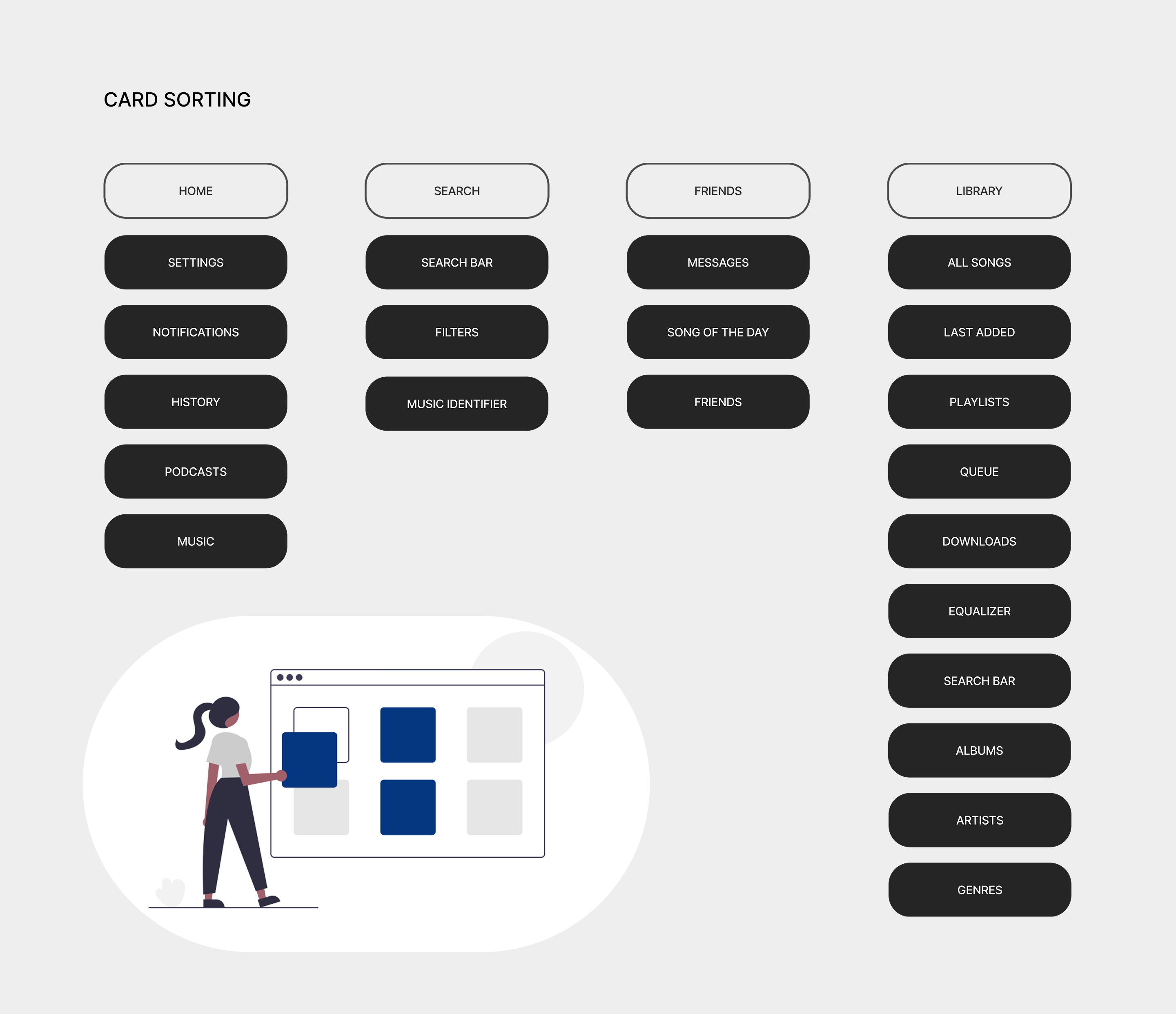
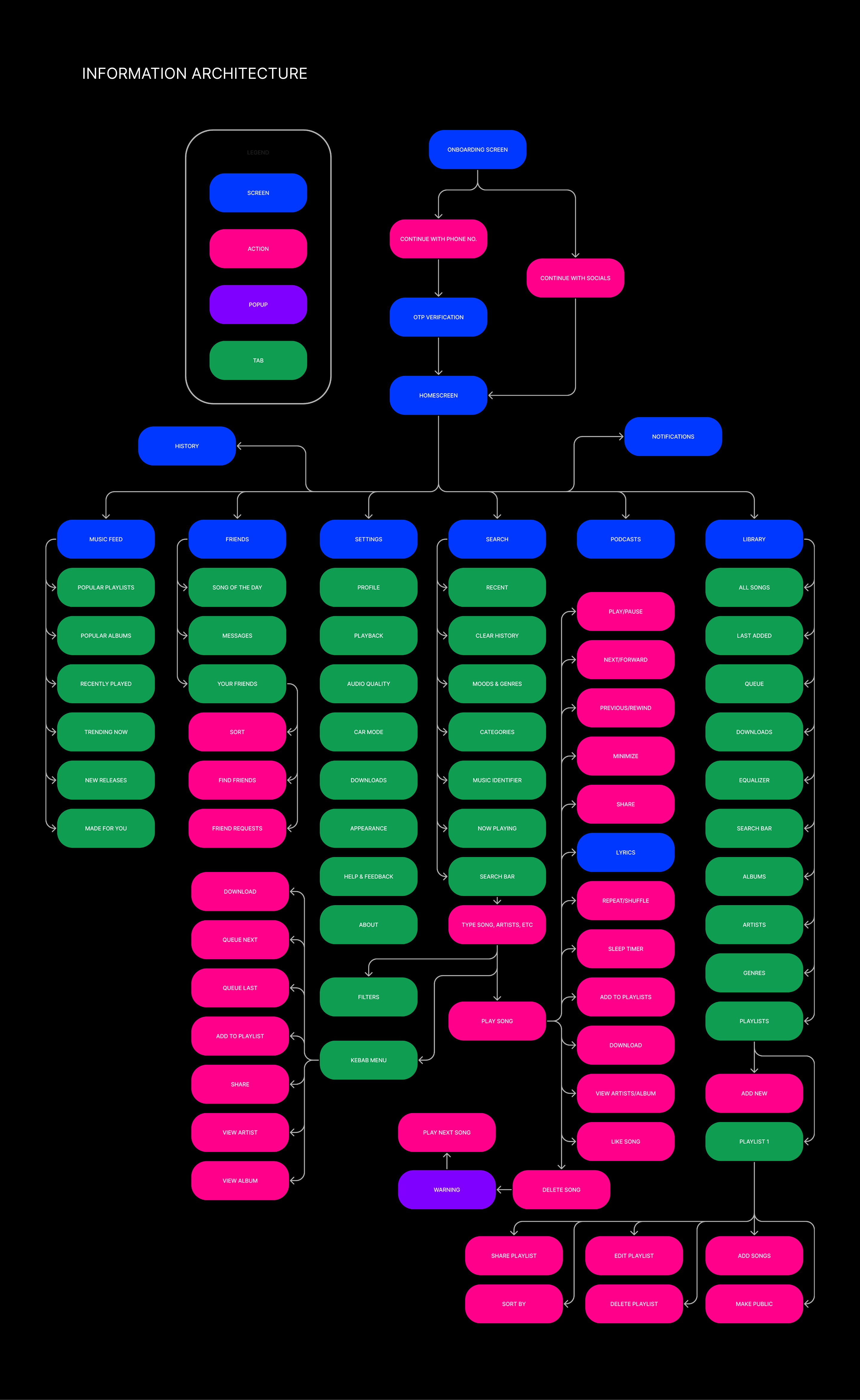
This phase explored solution possibilities through structured ideation methods. I framed How Might We questions, applied MoSCoW prioritization, and used card sorting and information architecture to organize features logically and shape a scalable, user-centric flow.
DESIGN
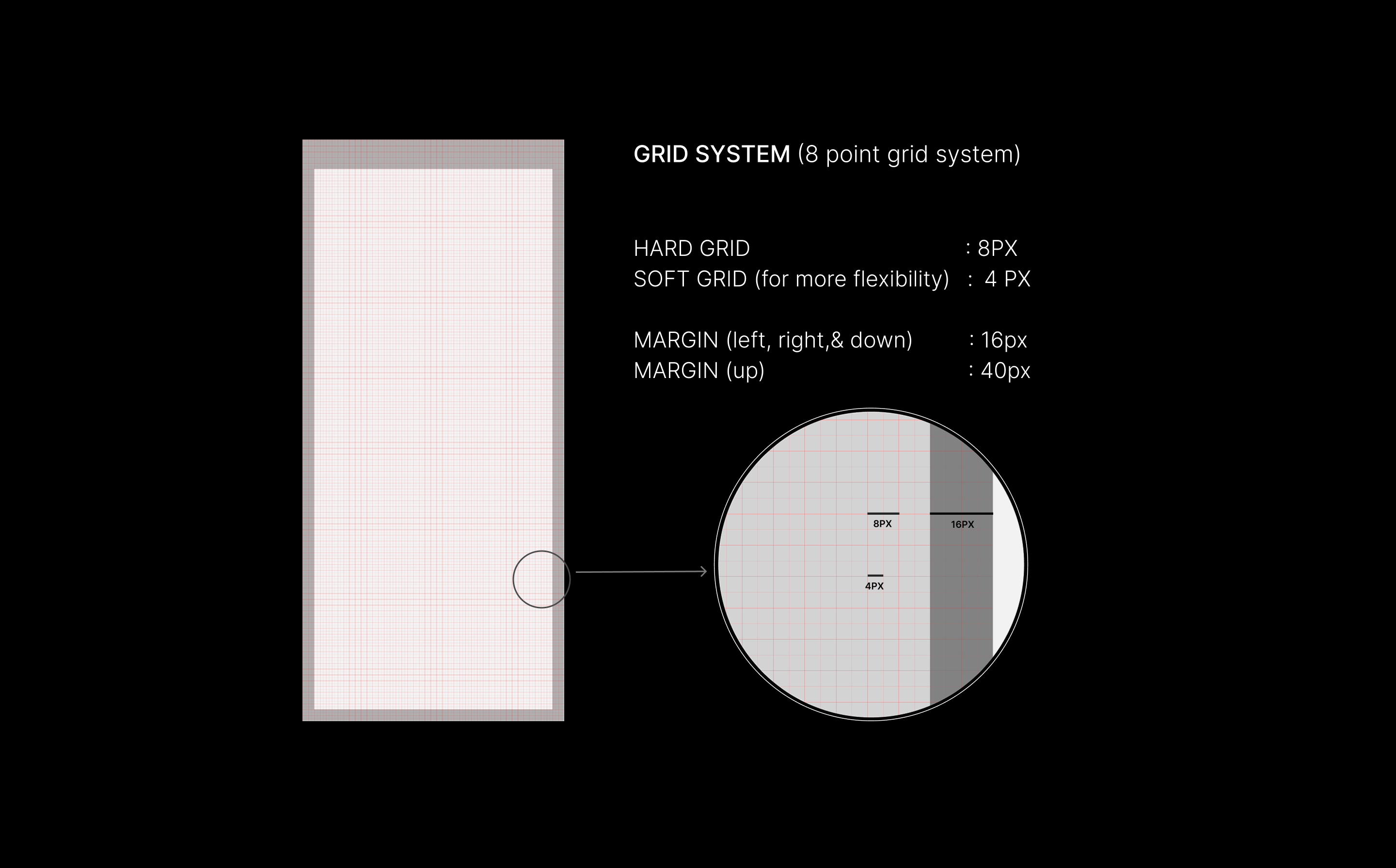
In this phase, ideas were translated into structure and visual form. I began with low-fidelity sketches and wireframes, established an 8-point grid system, and progressed to high-fidelity wireframes.
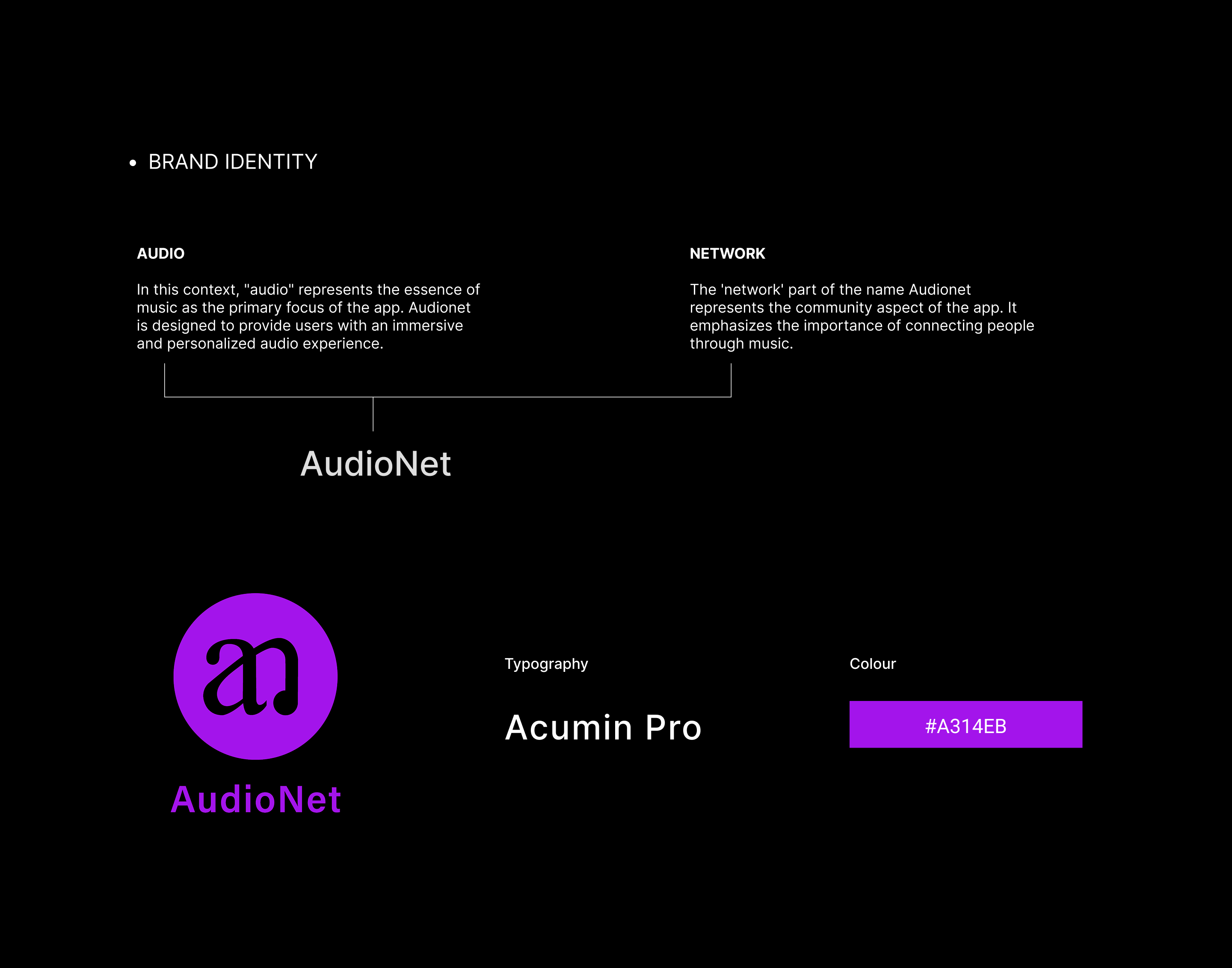
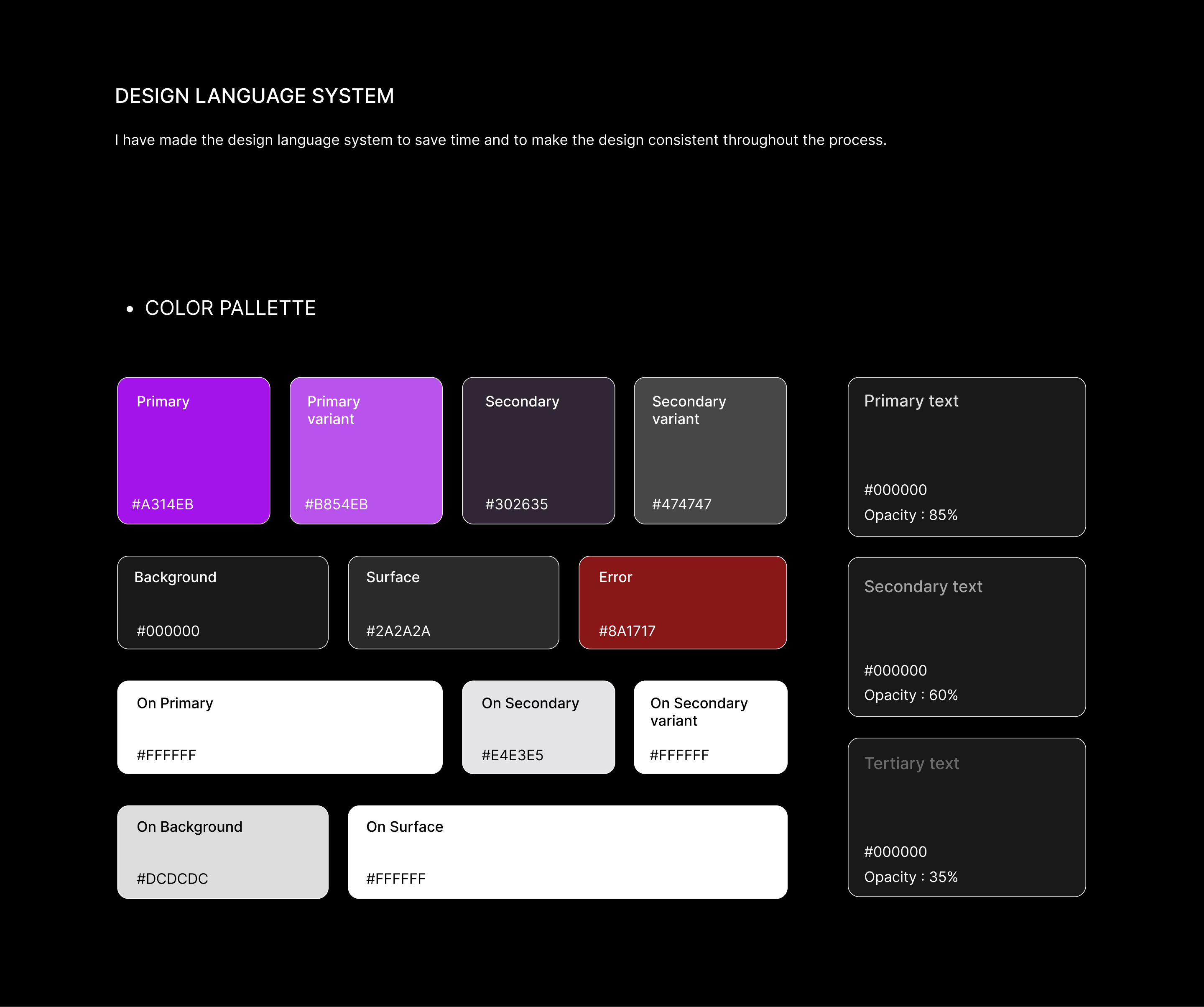
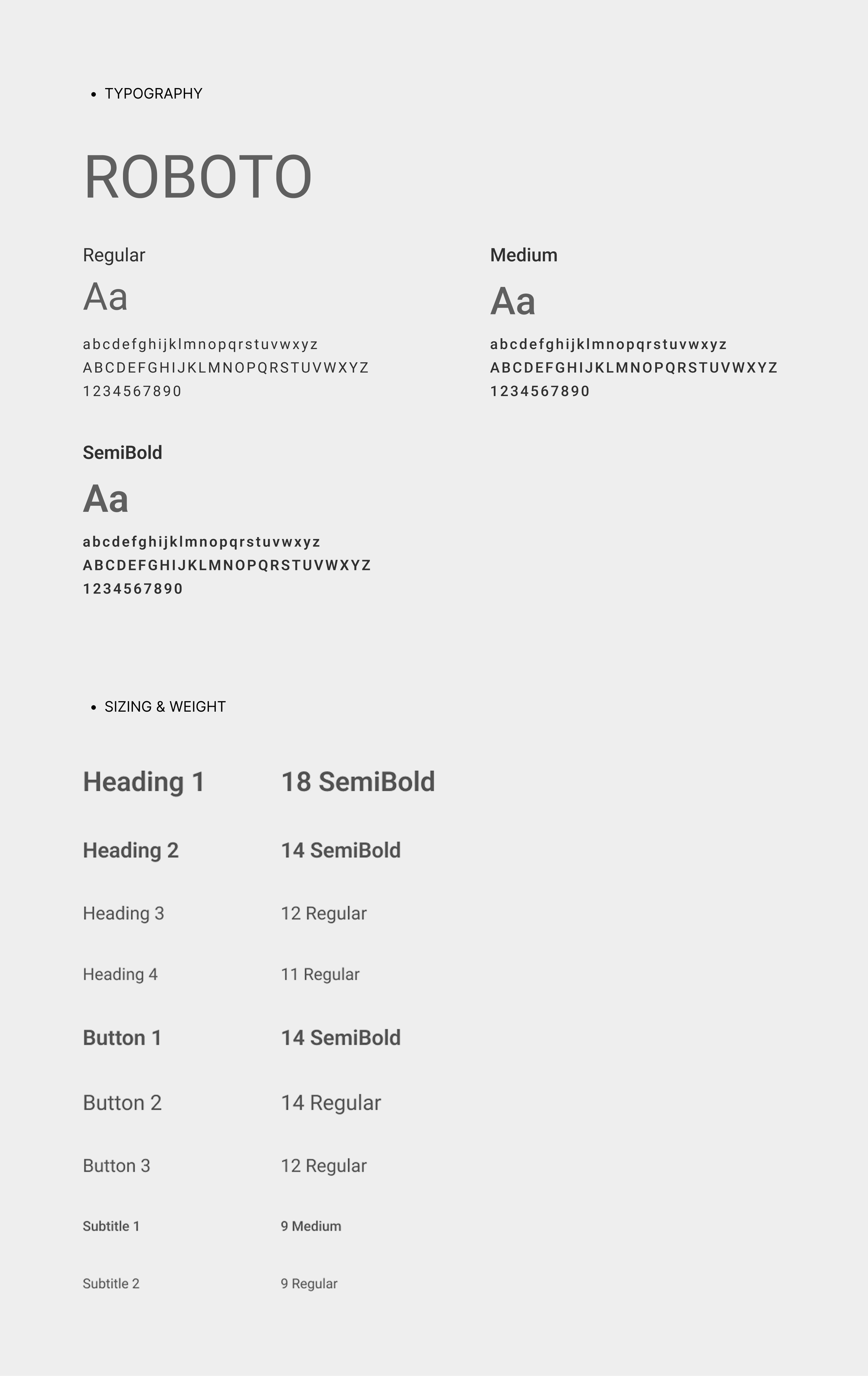
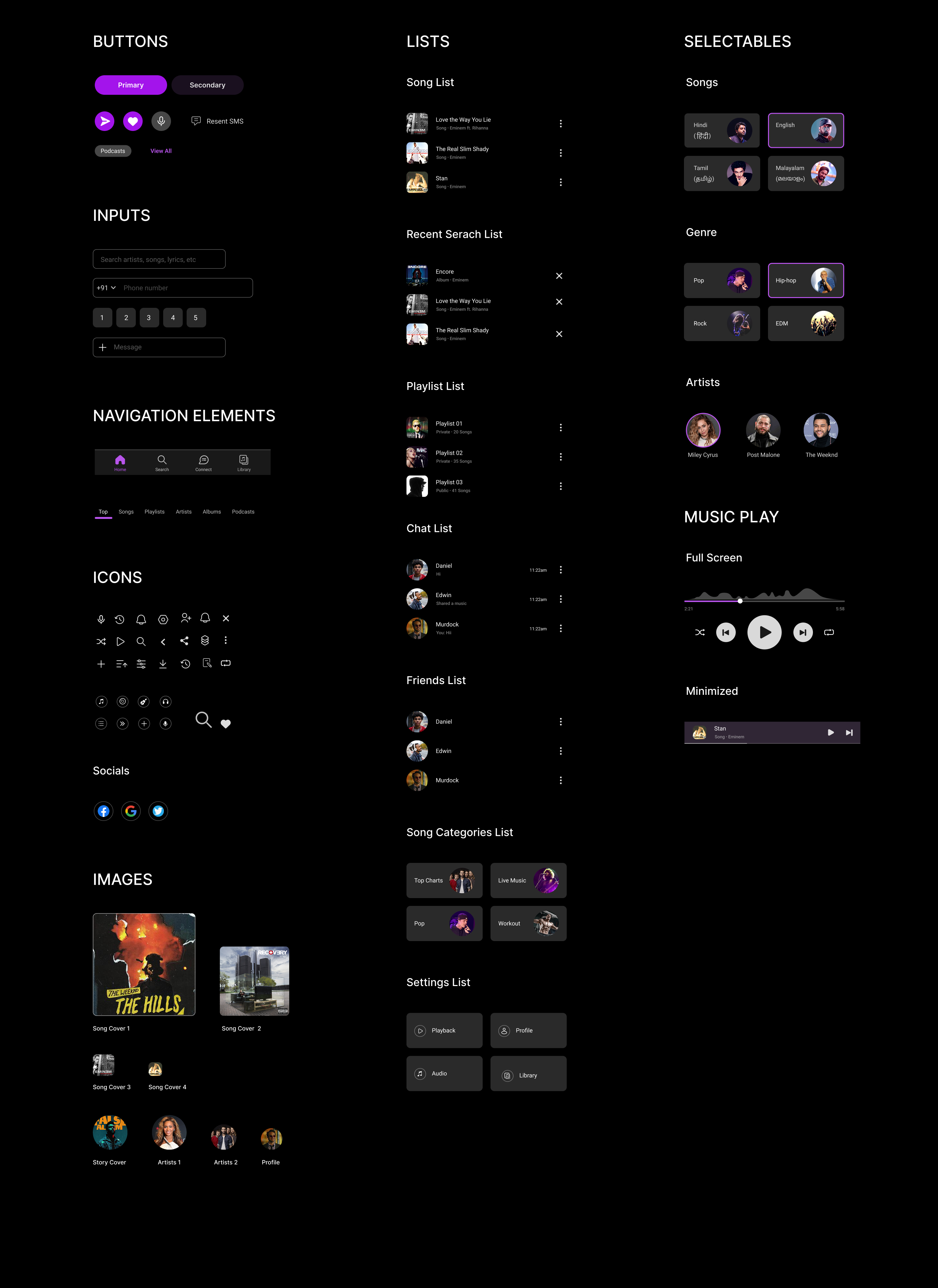
A cohesive brand identity was then defined through logo, color palette, and typography, followed by a complete style guide covering UI elements, components, icons, and interaction patterns used across the app.
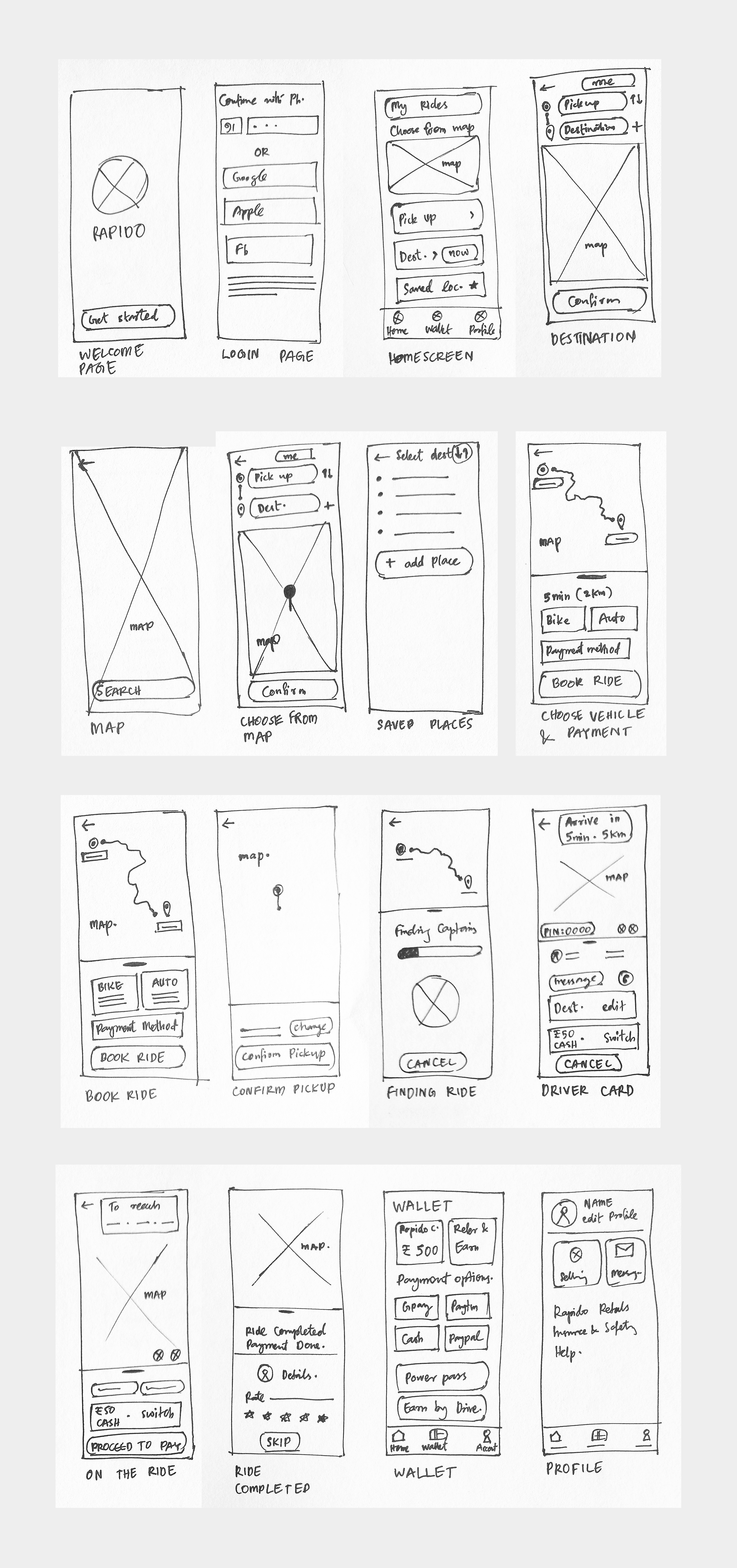
LO-FI WIREFRAMES
I have sketched wireframes of some major frames on paper to get an overall idea to create the hi-fi wireframes.
HI-FI WIREFRAMES
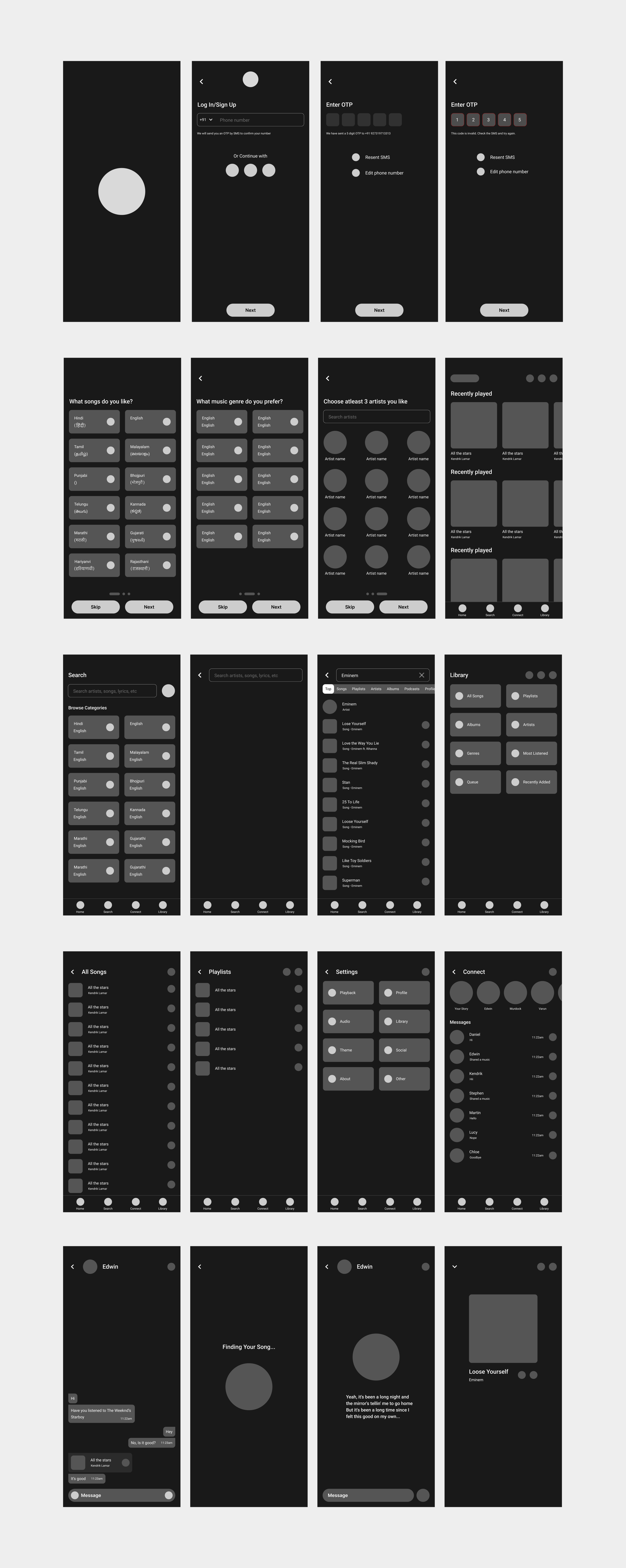
From the low-fidelity wireframes I have made high-fidelity wireframes. I have made so many changes, like adding some features as well as stripping down different options, unwanted text, icons etc.
MAIN SCREENS
These are the main screens which showcase the unique selling points (USPs) of the app. These features foster a sense of community and create a space for users to share their love for music with others.
ALL SCREENS
A consolidated view of all screens, showcasing the final UI across primary user scenarios.
USER FLOW
This walkthrough captures the complete user journey across key screens, showcasing primary interactions, transitions, and decision points within the app.
USABILITY TESTING INSIGHTS
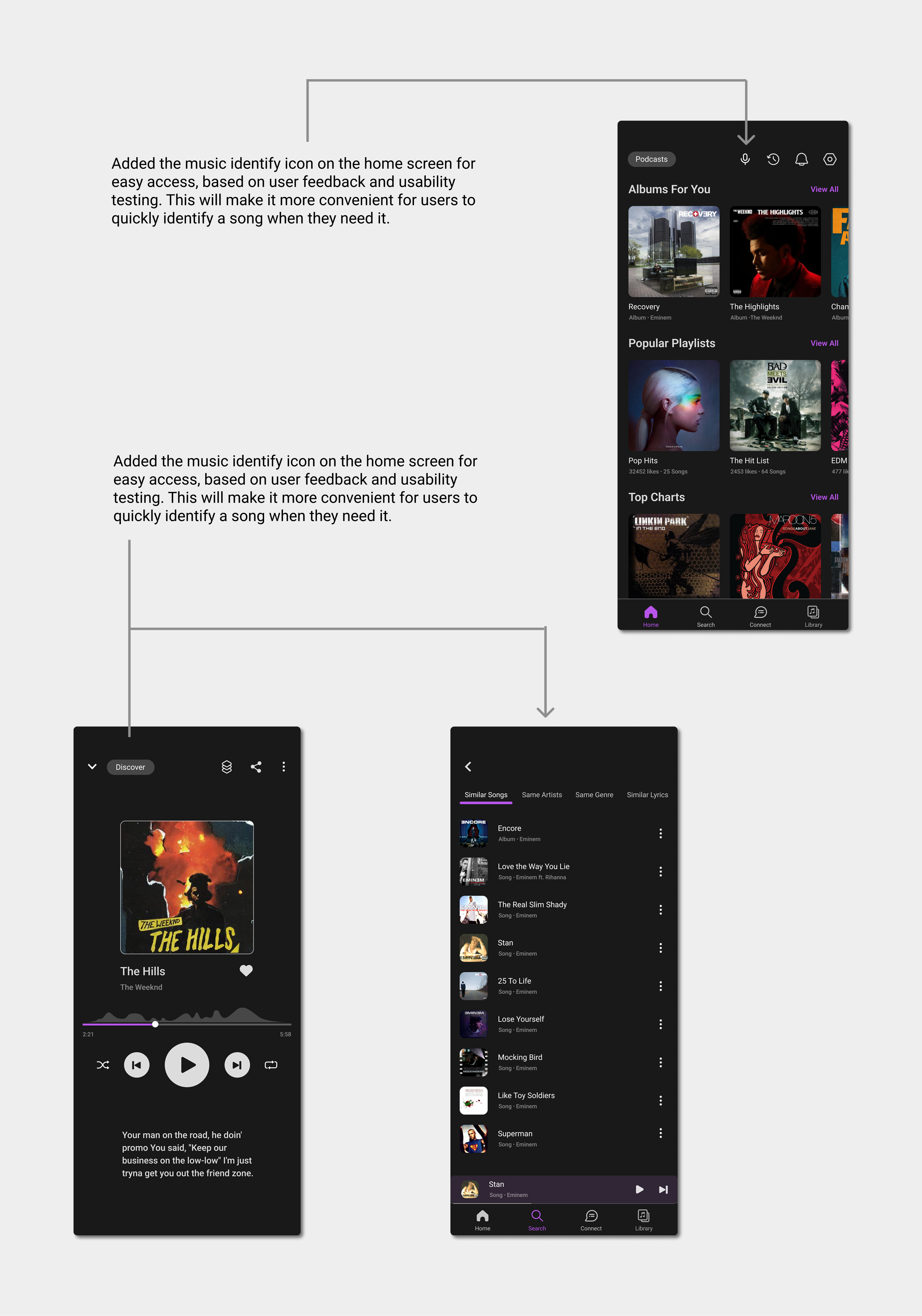
Users often face difficulty in locating the ‘Identify Music’ feature within the app, particularly when they urgently need to identify a song that they are currently listening to. This can lead to frustration and a poor user experience.
Users prefer having a “Discover” button on the music player screen, which takes them to a new screen with music suggestions based on similar songs, artists, and genres. This feature helps users easily explore new music without having to search for it manually.