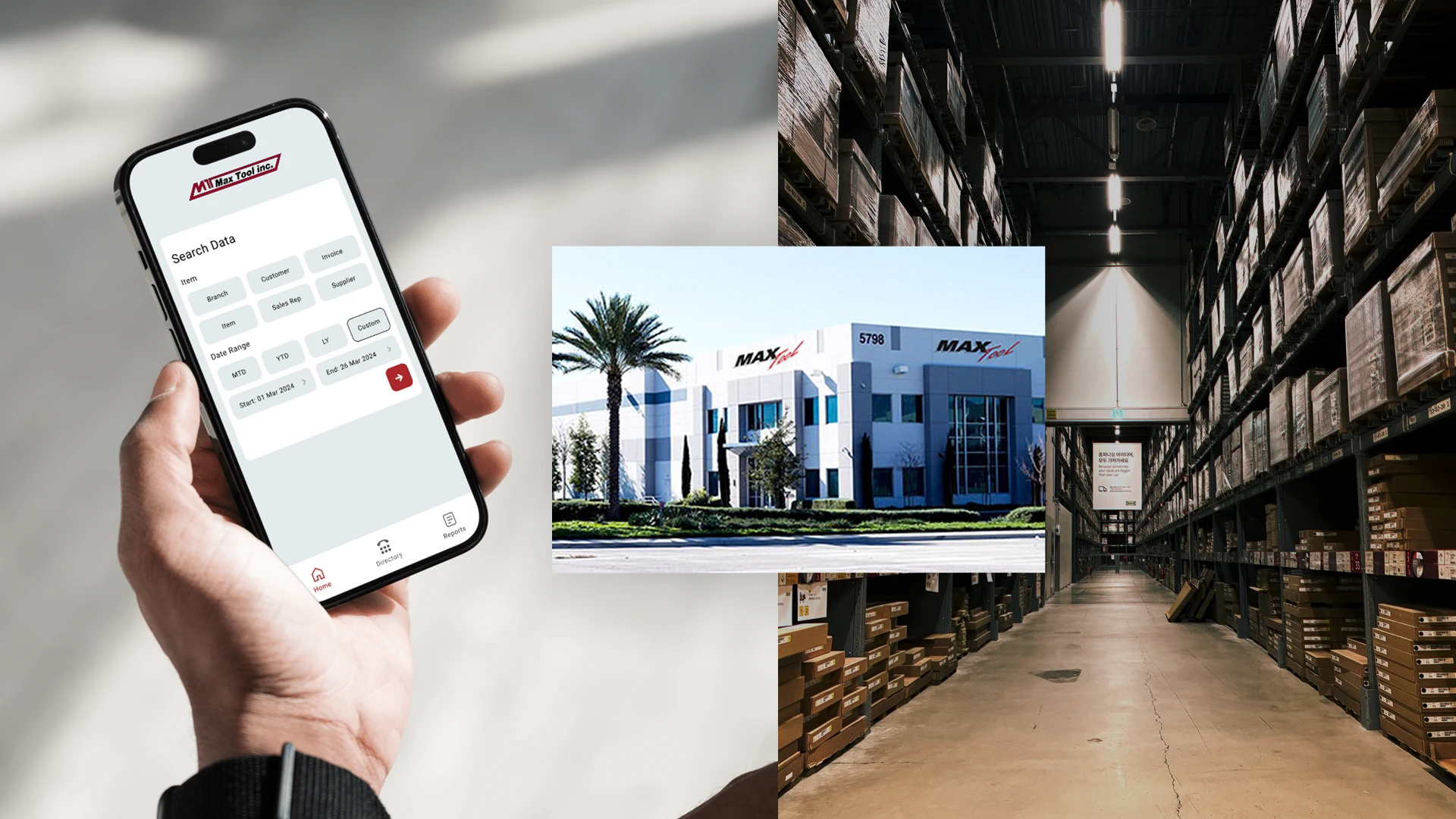
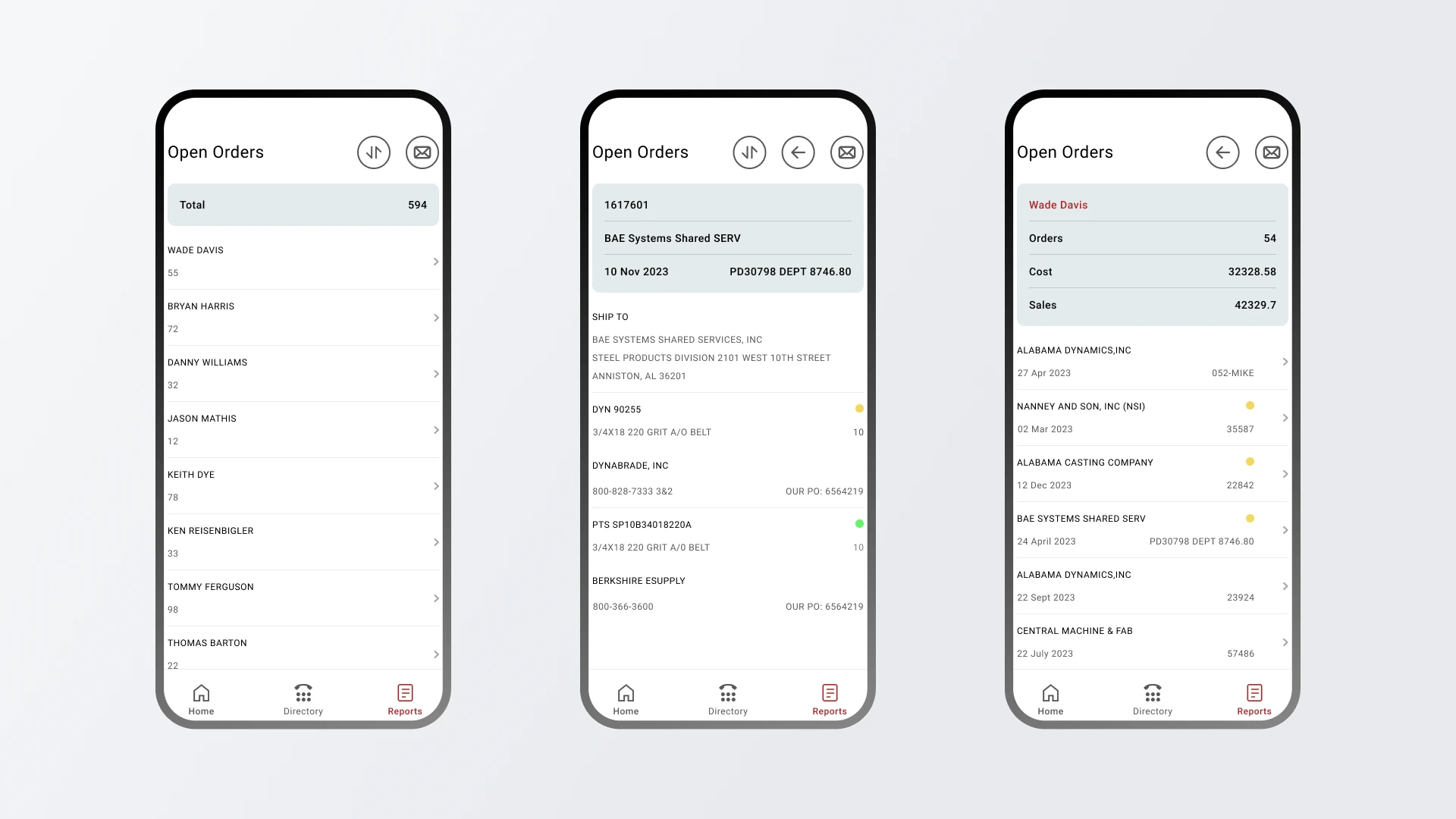
Max Tool is an industrial tooling company serving enterprise customers across multiple locations. The product is an internal mobile application used by sales teams, operations, and management to track orders, customers, suppliers, inventory, and performance data in real time.
This was not a consumer-facing app. The core challenge was designing a high-density, data-driven mobile experiencethat supports speed, accuracy, and decision-making in real business environments.
My Role & Design Ownership
I led the product design end to end, from early discovery and UX structuring to final mobile UI delivery. This included defining workflows, designing information architecture, creating wireframes, and building the complete mobile interface system.
I worked closely with stakeholders to translate operational requirements into usable mobile flows, handled developer handoff, and supported post-design validation to ensure the product worked reliably under real usage conditions.
Designing for Data-Dense Workflows
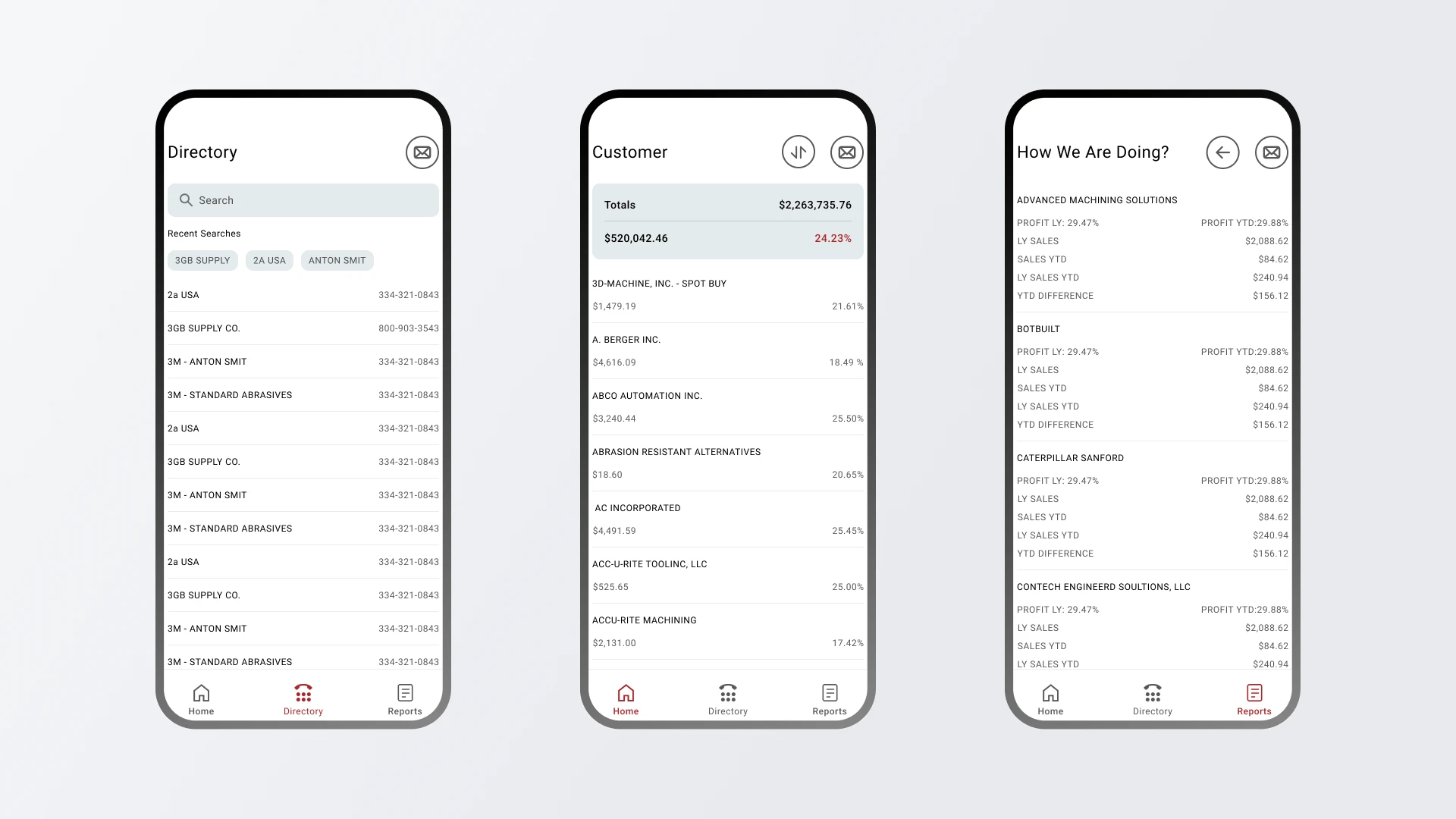
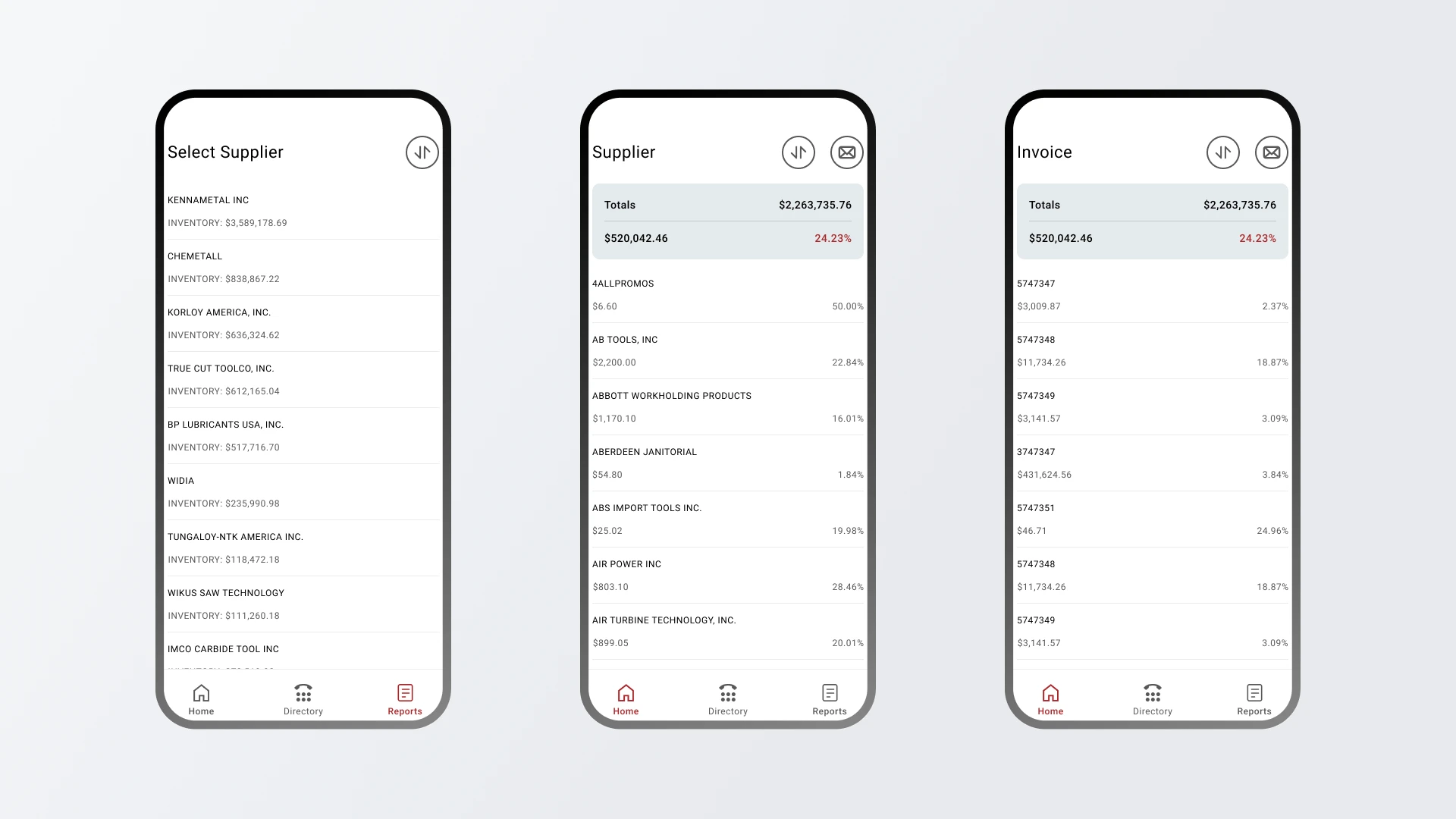
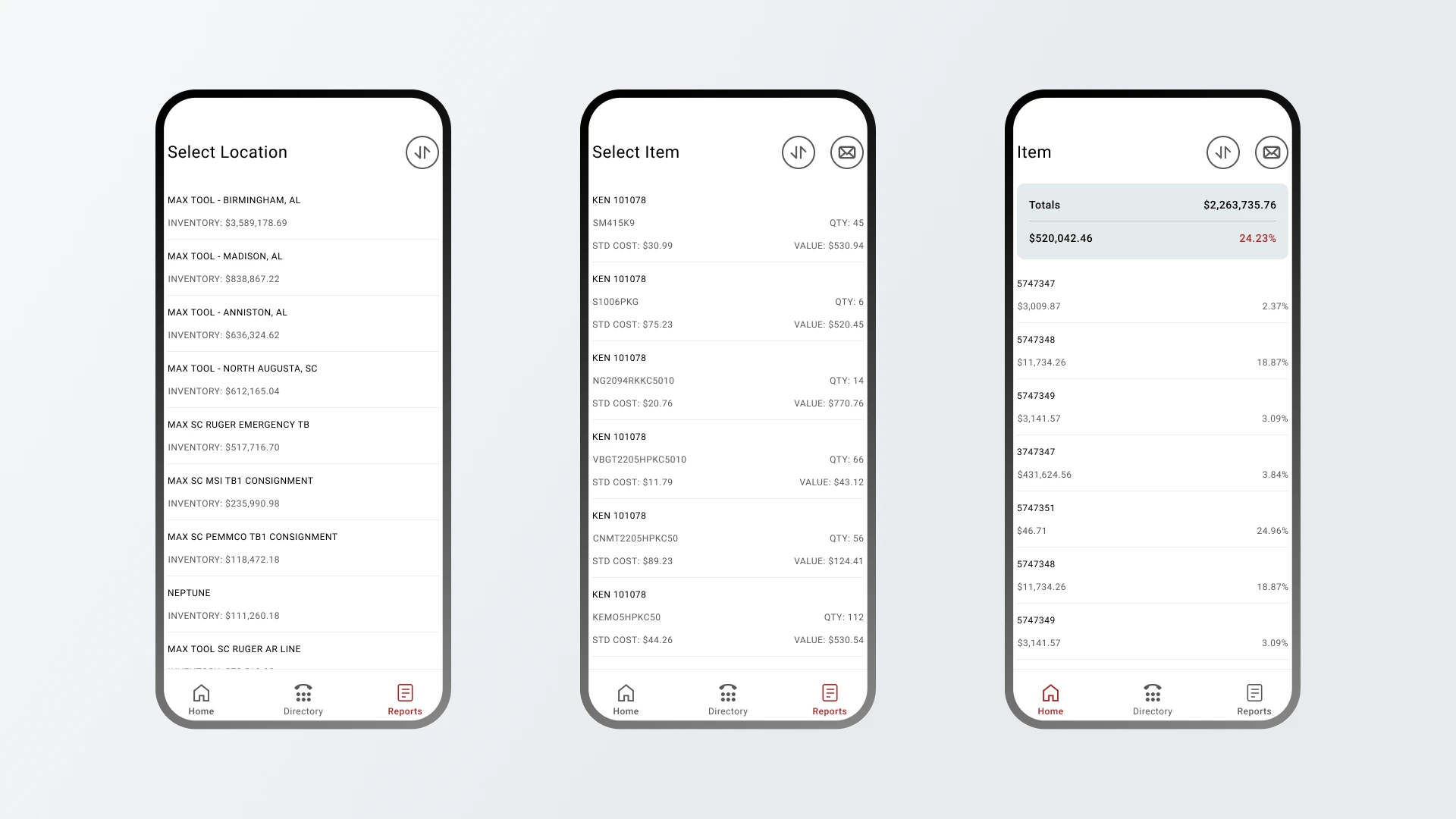
The primary design challenge was data complexity. Screens needed to surface large volumes of information—sales figures, customer data, invoices, inventory levels, margins, and performance metrics—without overwhelming users.
The UI prioritizes hierarchy, scannability, and clarity. Typography, spacing, and layout decisions were made to reduce cognitive load and improve quick comprehension, especially for users accessing the app during work hours.
Operational Workflows & Navigation Logic
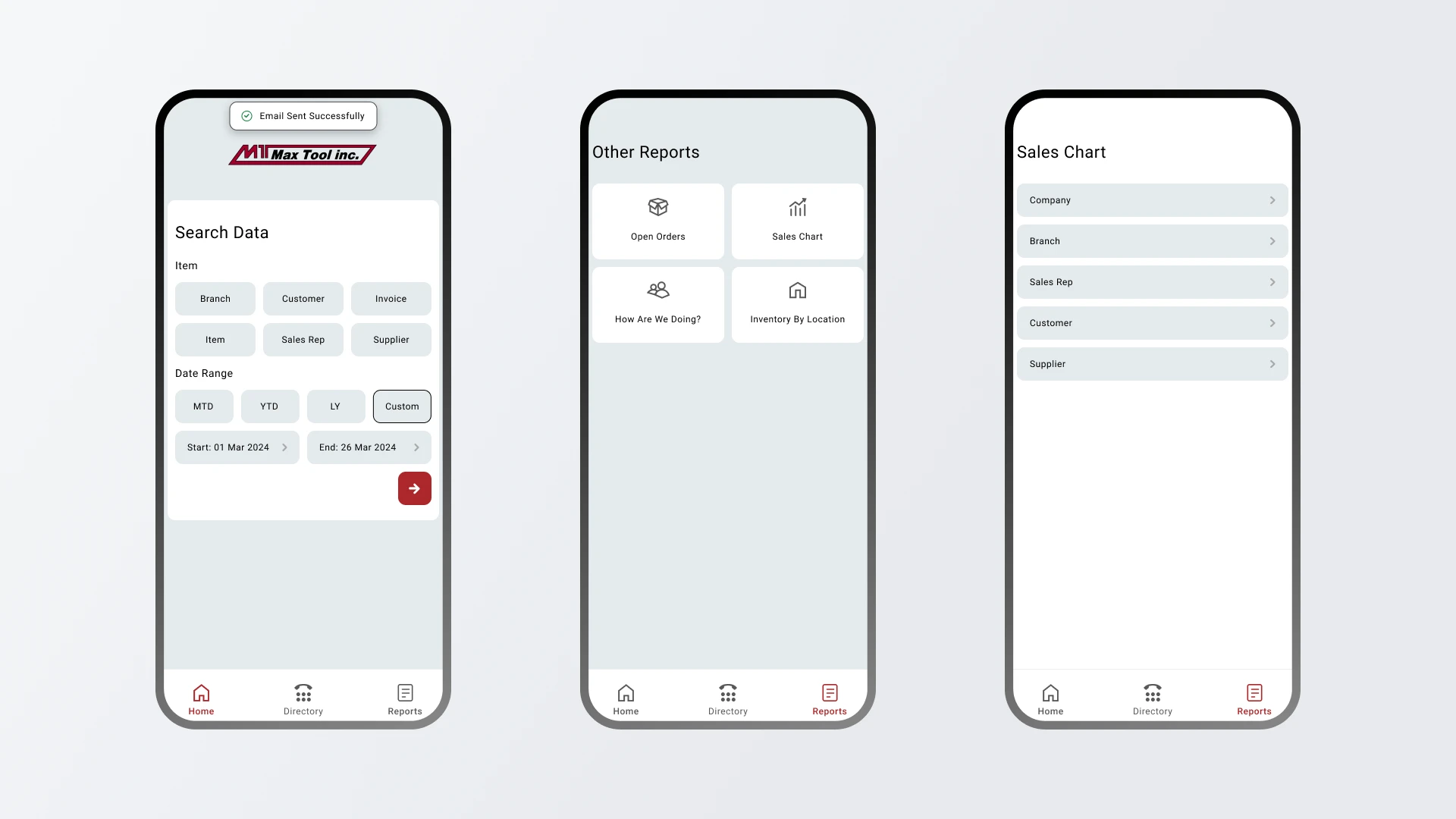
The app is structured around core operational tasks: search, directory access, reports, and performance tracking. Navigation patterns were designed to minimize friction between high-frequency actions such as checking open orders, reviewing sales summaries, or drilling into customer or supplier details.
Each flow was designed to support fast transitions between overview and detail, enabling users to move from summaries to actionable data with minimal steps.
Reporting, Insights & Decision Support
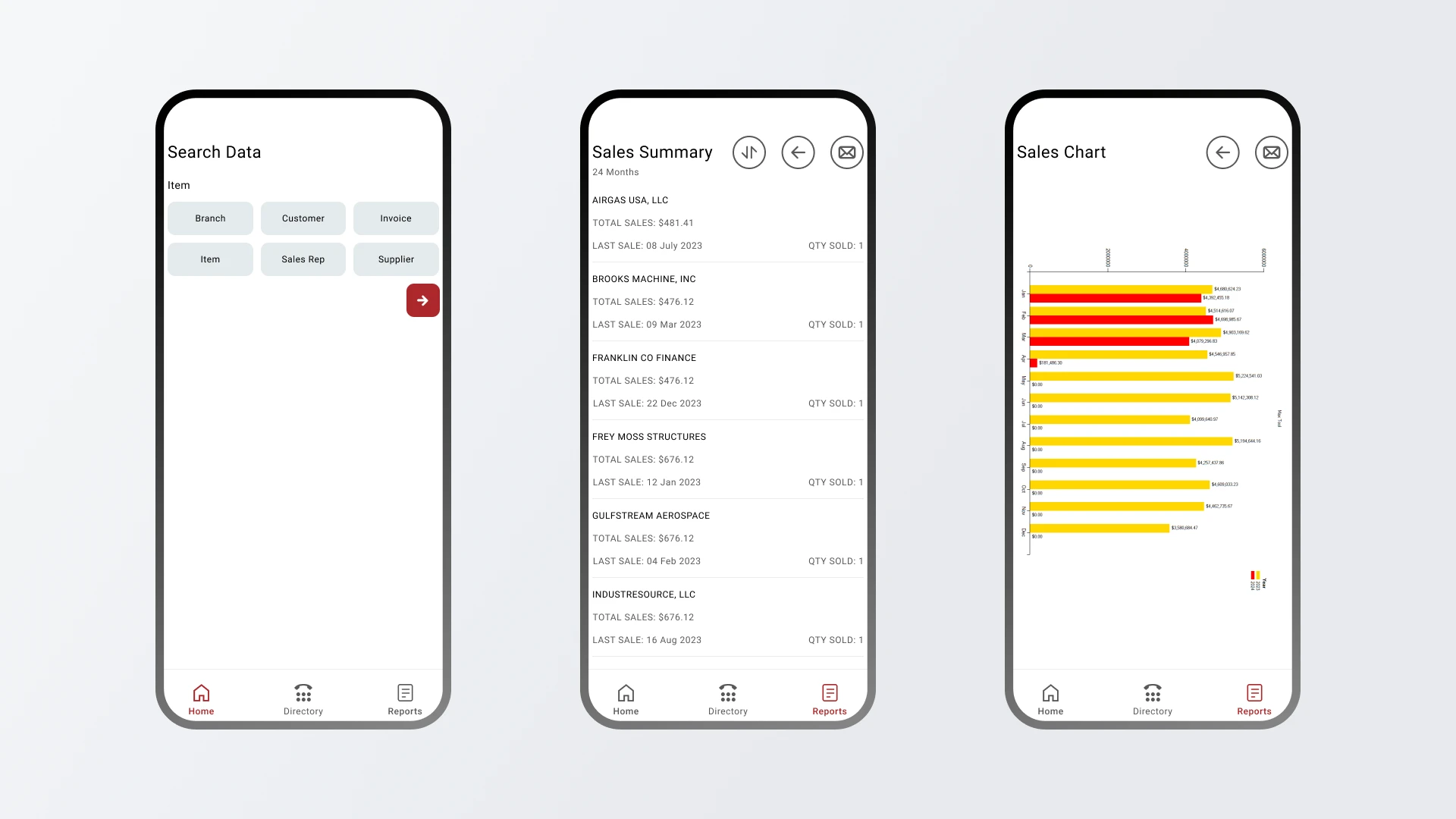
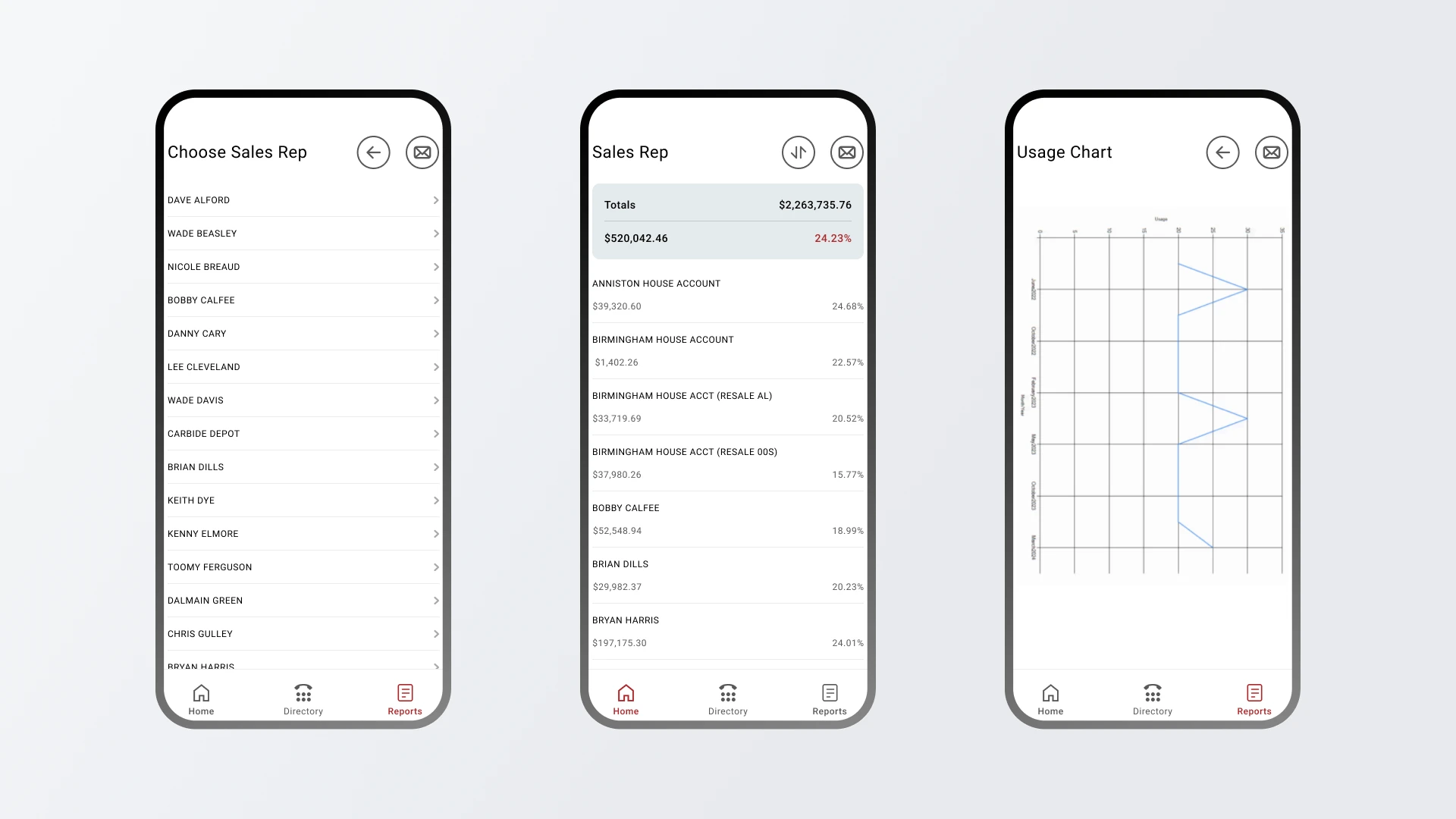
A major focus of the product was reporting. Sales summaries, charts, usage metrics, and performance breakdowns were designed to be readable on small screens while still conveying meaningful insights.
Visual elements such as charts and totals were treated as decision tools, not decoration, supporting managers and sales teams in understanding trends, performance gaps, and operational status at a glance.
Mobile-First Constraints & Real-World Use
This product was designed specifically for mobile usage in enterprise contexts, where users may be multitasking, moving between locations, or operating under time pressure. Touch targets, scrolling behavior, and content grouping were optimized for one-handed use and quick interactions.
Consistency across screens was critical to ensure predictability and reduce training time for internal users.
Impact & Product Outcome
The final product delivered a robust, scalable mobile UX capable of handling complex business data without sacrificing usability. The app enabled faster access to operational insights, reduced friction in daily workflows, and provided a clear foundation for future feature expansion.
This project demonstrates my ability to design serious enterprise products, balance usability with complexity, and take full ownership of mobile UX from concept to execution.